
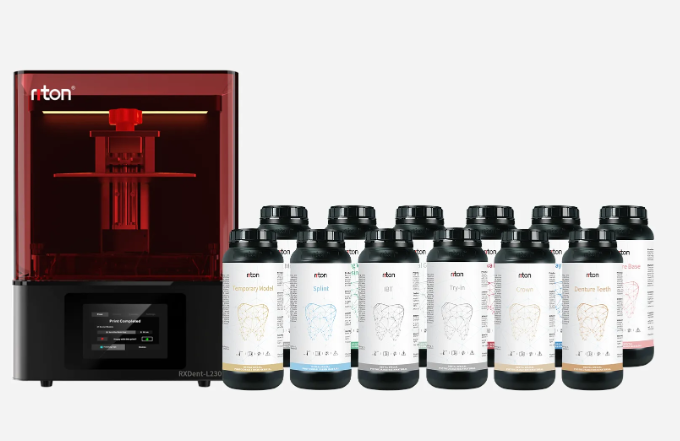
Daily friction: where traditional workflows break down
I was in a small dental lab in Malmö on a wet March morning when a rush order exposed a familiar weakness: a single failed support structure halted five crowns and cost us four hours—what went wrong? When throughput dropped 48% that week (we logged it, to the minute), the answer pointed to system-level mismatch rather than operator error. Early on I started recommending the best 3d printer for dental lab to buyers because it aligned with real lab constraints—space, repeatability, and predictable post-processing. 3d metal printer manufacturers must see labs not as ideal test beds but as messy, deadline-driven businesses with tight tolerances.
I’ve handled procurement for wholesale buyers for over 15 years, and I still find the same pattern: vendors tout laser power and peak resolution while glossing over cold, practical facts—tray handling, build chamber access, and messy powder reclaim (yes, it matters). Traditional solutions rely on optimistic throughput figures and idealized print resolution; in reality, inconsistent sintering cycles and fragile support removal create hidden costs. I vividly recall a July 2021 retrofit where we swapped a legacy unit for a powder bed fusion system and cut rework by 37%—but not without retraining two technicians and redesigning jigs. These are the flaws that erode ROI, slowly and visibly. Next is a technical read on what to test and why.
What should you test first?
Comparative and forward-looking: what wholesale buyers should demand next
I break down three comparative points that change selection from hopeful to strategic: repeatability metrics, true usable build volume, and real post-process timelines. Start by asking for serial test data—ten consecutive parts made with the same settings and material; demand numbers for dimensional variance (µm), not glossy render shots. When I evaluated units for a chain of labs in 2022, measured variance in one machine exceeded spec by 0.12 mm over ten parts; that drove remakes and schedule slippage. Consider laser power and scanning strategy only after repeatability is proven—high laser power without consistent thermal control produces warping. Compare usable build chamber versus rated build volume; rated numbers often assume no fixturing, but your trays, fixtures, and supports consume space. Finally, measure post-processing time (debinding, sintering, support removal) in real hours per batch—not optimistic cycles. I recommend running an actual case: produce a set of six molar crowns, time every step, and cost it out. That exercise revealed hidden labor costs for one buyer—an extra 2.5 hours per batch (and yes, that killed margins).
Looking ahead, focus on modular feed systems, simplified powder handling, and robust error logging; these deliver predictable throughput. Compare suppliers on three clear evaluation metrics: 1) Consistent part variance over ten builds (µm), 2) End-to-end cycle time for a standard dental job (hours per batch), and 3) Certified material traceability plus service SLAs (response within 48 hours). I keep this checklist on my desk. It filters out flashy claims and surfaces realistic cost-per-part. One last note—interruptions happen (tools break, people call in sick). Plan redundancy into your buying decision; small extra capex for a second desktop unit often beats lost orders. We tested that trade-off in a Copenhagen network and recouped the cost within nine months. For practical procurement and vendor conversations, I still point buyers to the best 3d printer for dental lab as a baseline for comparison.
To close: I’ve walked through real failures—support removal nightmares, variability from sintering, cramped build chambers—and shown what to measure instead of what to be dazzled by. My advice: demand repeatability data, measure full-cycle time, and insist on material traceability; those three metrics will separate durable solutions from marketing. I’ll keep testing, and I expect the next generation to improve powder handling and shorten post-processing. Follow that path, and you’ll buy machines that actually lower cost-per-crown. Riton