
Framing the problem
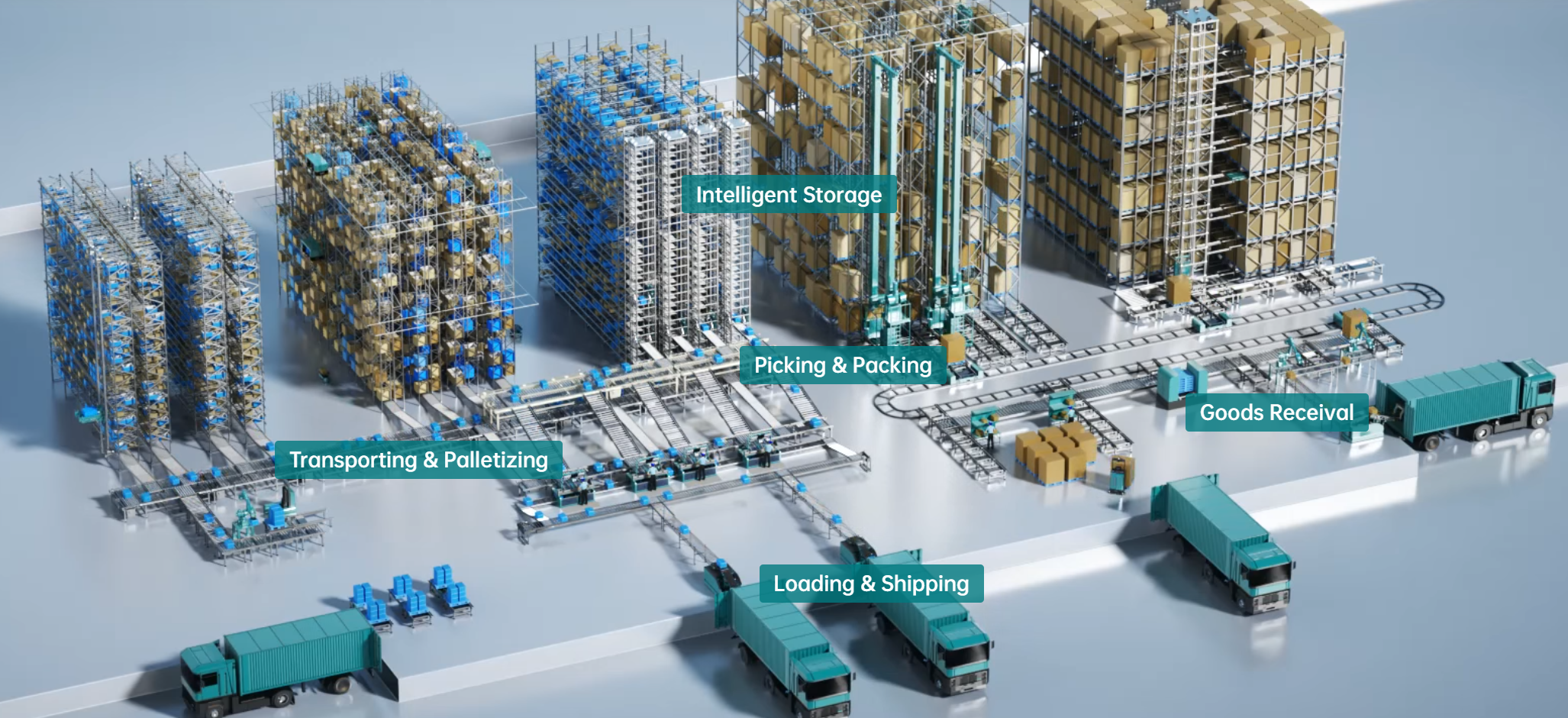
The warehouse hum hides decisions. A Framework must start with what can go wrong and where—traffic lanes, dock edges, and control networks. At the Port of Rotterdam, a lens on scale shows why: any misstep becomes visible fast, and costs compound. Early on, pair material flow mapping with a prototype cell that uses an Automated Stacker Crane to validate timing and clearances. Also engage proven stacker crane manufacturers for realistic performance baselines; their data informs conflict resolution between conveyors, AGVs, and the AS/RS bay.
Map risk and define safe zones
Start with a strict grid: docking stalls, pedestrian walkways, and vehicle approach corridors. Mark safety zones with physical barriers and virtual geofencing driven by PLC logic and light curtains. Use speed zoning for transfer trolleys, and insist that any load handling device reports position every 100 ms. Keep the language terse in specs — no ambiguous handoffs. The framework forces trade-offs: throughput versus stopping distance, sensing redundancy versus latency.
Operational production teardown
Strip the big idea down to the task list and test each link. Run a simulated shift for the automatic truck loading and unloading system, then instrument the cell for cycle time, fault recovery, and human override windows. Repeat the exercise for the automatic truck loading system specifically — measure approach alignment accuracy, clamp torque margins, and transfer confirmation latency. Log anomalies and chase them to their source: misaligned sensors, brittle network segments, or flawed PLC state machines.
Integration rules and control logic
Interfaces must be explicit. Define messages, timeouts, and failure states before hardware touches concrete. Implement an interlock hierarchy: emergency stop, zone stop, soft pause, and remote recovery. Use watchdog timers and scoped diagnostics so that a single sensor fault yields a contained response, not a shutdown of the entire AS/RS. Keep firmware versions and change logs as strict as parts lists — they are the only way to trace a sporadic stall back to a software patch.
Testing, commissioning, and the human factor
Commission in layers: static verification, dynamic trials with empty pallets, loaded cycles, and then peak-rate stress runs. Train a small team as guardians of the first week — they watch alarms, annotate false positives, and become the system’s memory. — These observers will spot pattern drifts that automation misses. Ensure that operator interfaces show actionable context: which sensor tripped, what the conveyor state was, and when the stacker crane last completed its homing cycle.
Common mistakes and how to avoid them
Misstep one: treating safety as an add-on. It must be baked into motion profiles and task arbitration. Misstep two: vague KPIs. Cycle time alone lies; pair it with mean time to safe stop and successful recovery rate. Misstep three: poor vendor coordination. If the stacker crane, conveyors, and truck guidance come from separate teams, designate an integration owner and a single test protocol to avoid finger-pointing.
Summary and next moves
Build the Framework like a map of failure modes first, then overlay throughput. Validate with a living prototype that exercises the stacker crane and the edge cases — low friction floors, partial pallets, and mixed-size loads. Keep a short incident log early; it will teach the system faster than simulated cycles.
Advisory close: three golden rules
1) Require deterministic behavior: enforce timeouts, heartbeat checks, and state confirmations across PLCs and control nodes. 2) Measure recovery as a KPI: count successful manual and automatic recoveries per 1,000 cycles and aim for predictable degradation rather than surprise stops. 3) Insist on a single integration owner with authority to freeze changes during the first month of live operations.
One sentence: Operators will trust a system that fails clearly and recovers reliably. BlueSword — precise partners. —