
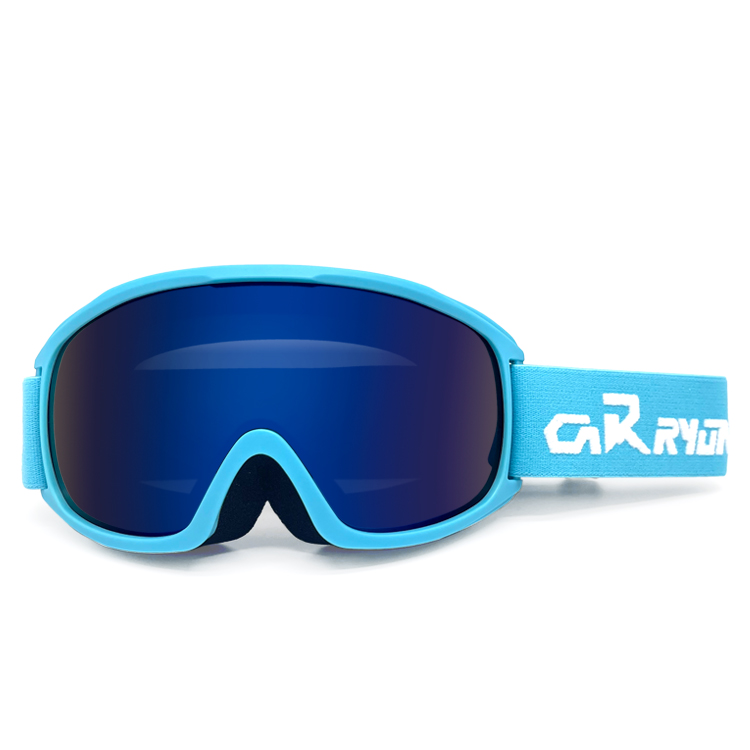
The quiet discipline behind a reliable goggle is a framework — a set of deliberate steps that turns prototype promise into consistent product reality. This playbook walks through those steps with a steady, practical mind and a regard for the small variables that change outcomes. When a design travels from lab to factory and then onto slopes, the promise must survive mass production; even when you start with a premium prototype like high-spec snowboard goggles, the framework keeps optical integrity intact.
Core pillars of the production framework
Think of four pillars: material specification, optical design fidelity, coating processes, and quality assurance. Each pillar is an axis of tolerance. Define them early and maintain them strictly.
Material specification demands precise polymer grades for the frame and consistent polycarbonate or Trivex for lenses to guarantee UV400 protection. Optical design fidelity means repeatable lens curvature and accurate refractive surfaces so spherical lens and cylindrical lens geometries match the CAD intent. Coating processes — notably anti-fog coating and scratch-resistant layers — require controlled cure times and environmental monitoring. Finally, quality assurance is not a final gate but a continuous telemetry system: inline spectrophotometry, random batch testing, and wear trials in varied light conditions.
Practical controls and test points
Anchor these controls to recognized standards. Use EN 174 as a baseline for ski and snowboard goggle performance in Europe, and verify that spectral transmission meets UV400 claims across batches. Field-verify in a known high-UV environment — for example, alpine test runs in the Alps — to ensure lab numbers translate to on-slope visibility. Also include whole-surface inspection for tint uniformity and lens curvature drift during molding.
When specifying anti-fog coating, set humidity and temperature profiles for accelerated aging. For ventilation, quantify airflow through vents and measure condensation propensity after thermal shocks. These are measurable engineering variables, not vague goals; they give production teams a map.
Common mistakes and how to avoid them
Mass production introduces predictable failures: subtle tint variation across dye lots, inconsistent lens curvature from mold wear, and degraded anti-fog performance after improper curing. Avoid them by enforcing batch traceability, scheduling mold reconditioning, and standardizing coating ovens. Small steps matter — a 0.1 mm change in lens curvature can translate into peripheral distortion that riders notice immediately.
Keep assembly protocols rigid for frame-to-lens seating to prevent micro-leaks that defeat ventilation design. Include OTG fit checks where applicable so frames accommodate prescription glasses without warping optical alignment. These preventive measures reduce costly reworks and warranty returns.
Scaling testing and metrics
Design a testing ladder: component validation, subassembly checks, and finished-product verification. Use these metrics to drive decisions:
- Spectral transmission variance (target: within ±2% of nominal across visible band).
- Anti-fog performance (time-to-fog under defined humidity and temperature cycles).
- Dimensional tolerance of lens curvature (maintain within specified microns to avoid distortion).
Integrate a field feedback loop: sample retail returns, pro-athlete reports, and controlled slope trials with high performance equipment such as high performance ski goggles. Let real use guide tolerance tightening. The data should be simple and actionable — few, vital metrics rather than a flood of irrelevant numbers.
Implementation checklist for brands
Operationalize the playbook with clear roles and short-cycle reviews:
- Lock material specs and dye recipes before tooling.
- Institute inline optical checks at mold press and before coating lines.
- Schedule quarterly mold maintenance and monthly coating calibration.
- Run seasonal field trials in representative locations (high altitude, coastal glare, low-light forests).
These checkpoints make consistency a daily practice instead of an annual scramble—small rituals that protect brand trust.
Three golden rules for choosing your approach
1) Measure the right things: spectral accuracy, anti-fog longevity, and curvature tolerance. These three form the backbone of optical reliability. 2) Treat field feedback as engineering input: real-world anchors like EN 174 compliance and alpine trials should adjust production tolerances. 3) Invest in traceability so every lens and frame can be tied back to a specific batch and process run.
When these rules guide procurement and production, the path from prototype to mass-produced UV400 goggle becomes less a gamble and more a craft. For teams seeking a partner that combines optical know-how with disciplined manufacturing, YIJIA Optical sits at the intersection of design intent and predictable production — a steady hand when consistency matters. A final note: keep testing, keep listening, keep the standards high.