
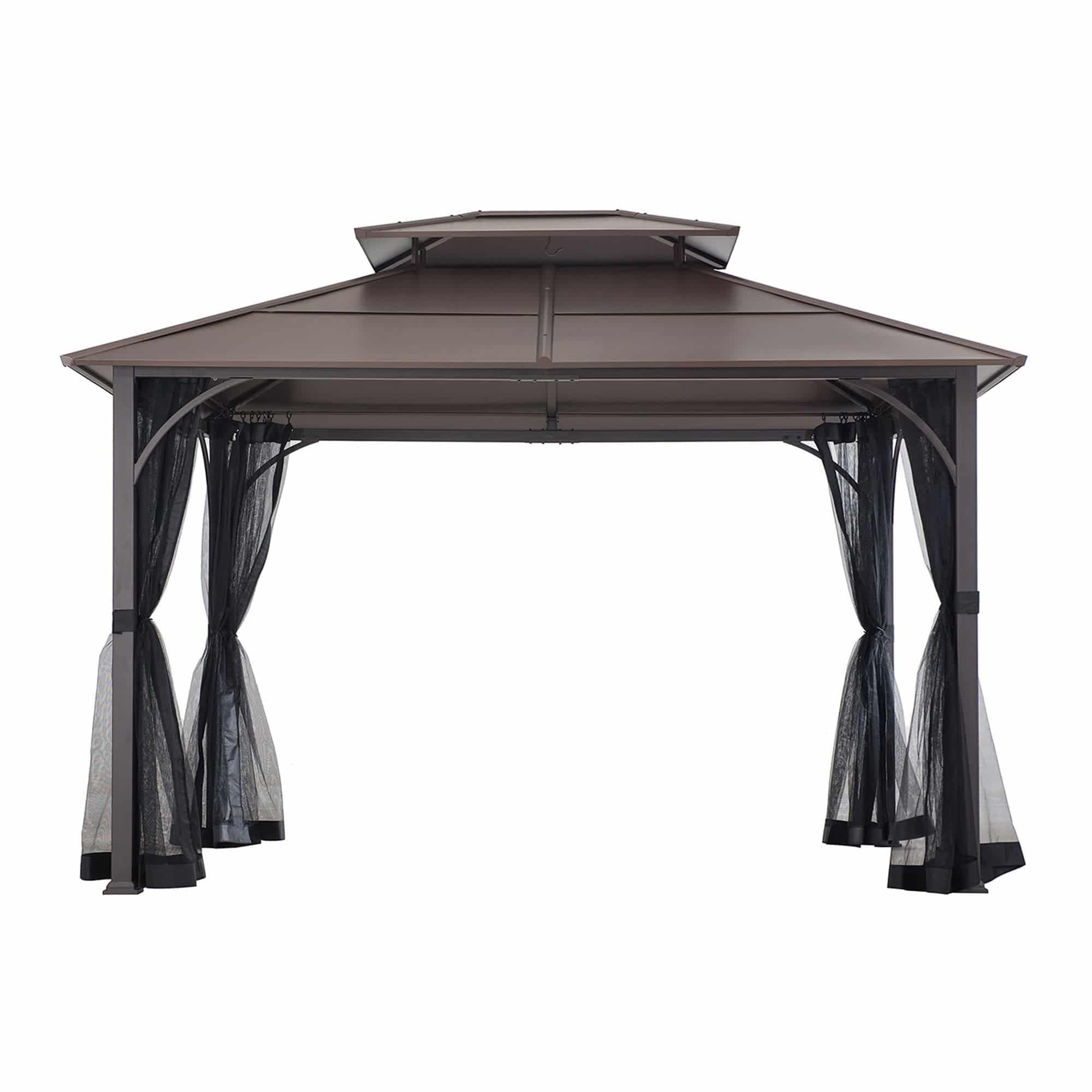
How to match Sunjoy Metal Gazebos with the way you use your yard: the seating arrangement under the roof for compact patios
Comparing SUNJOY metal gazebos starts with the seating plan, not the roof label alone. A compact patio may need room for two chairs, a small table, or a clear passage around existing furniture. Before opening product listings, decide what the covered area must accommodate and which items will remain outside it.

Start with the activity under the roof
The same footprint can serve very different purposes. A pair of lounge chairs needs open space for movement, while a dining setup needs a table position and enough clearance to pull out chairs. If the area will support casual conversation, place the seats where people can face one another without blocking an entry side. Sketching the arrangement with approximate furniture outlines can reveal whether the issue is total floor area or the position of the posts.
Also consider how often the layout will change. A fixed dining arrangement calls for a clear fit around the table. Flexible patio use may benefit from keeping one side less crowded. These are planning judgments rather than claims about any particular model. The product listing still determines the actual dimensions and included components.
Read dimensions before construction labels
The SUNJOY size guide groups examples from smaller formats such as 5×8 and 7×9 to larger formats such as 12×14, 12×16, and 12×20. It associates those examples with different outdoor-space scenarios. That range gives a useful way to organize a search, but it does not establish that every format will fit a particular patio or seating plan.
Measure the available area in more than one direction. Include the space needed to approach the seats, open nearby doors, and move around the structure. Then compare those measurements with the selected product page. Treat the listed footprint as the starting point for checking fit, not as a substitute for marking the layout on the ground. Seating capacity should likewise be confirmed for the exact product rather than inferred from a general size category.
Separate listed features from assumptions
An outdoor metal gazebo listing may sit among products with different material and roof labels. The collection identifies materials including aluminum, steel, wood, fabric, and polycarbonate or PC. It also identifies two-tier, gable, hip, and shed roof styles. Those labels help narrow the search, but they do not by themselves describe how much usable seating space a model provides.
The collection also says that most metal-gazebo models include or support some combination of netting, curtains, ceiling hooks, or a double-tier vented roof. Exact combinations vary by model. For a compact patio, inspect the selected listing for the stated accessories and consider whether curtains or netting would affect the usable arrangement when opened, closed, or stored. Do not treat a collection-wide feature summary as proof that every model has the same setup.
When comparing an outdoor metal gazebo, keep three questions together: What will sit beneath it? Where will people walk? Which features are explicitly listed for the model under consideration? This approach prevents a broad category label from doing too much work. It also keeps the comparison focused on the space the shopper actually has, rather than on an imagined layout.
Turn the comparison into a product-page checklist
A short checklist can make several listings easier to compare. Record the stated dimensions, material, roof style, and included or supported accessories for each candidate. Next, compare those details with the measured patio and the planned furniture positions. If two products appear similar, use the exact feature list and footprint to identify the meaningful difference instead of assuming that their category names indicate identical construction.
For a small patio, leave the seating plan visible while reviewing each listing. A model that fits on paper may still place a post where a chair, table edge, or walking route needs to go. The size guide can help sort smaller and larger examples, while the individual product page should control the final check. This is especially important when the intended use changes from two-person seating to outdoor dining.
Make the choice fit the real use
The strongest comparison connects the product’s stated dimensions and features to a specific arrangement. Choose a smaller format when the planned furniture and circulation fit within it; consider a larger example only when the available space and intended use support that decision. Use the collection’s material, roof, and accessory labels to narrow the field, then rely on the selected listing for the final details. Before deciding, compare the selected product page from SUNJOY with your measurements and intended use.
- Match the selected product’s stated dimensions with the measured patio and the intended furniture arrangement.
- Confirm the exact model’s material and roof style instead of relying only on the collection category.
- Check whether the selected model lists the netting, curtains, ceiling hooks, or double-tier vented roof features you need.