
When the grid becomes the problem
The power that once hummed as a constant now falters. Communities from Northern California to Texas have faced rolling blackouts and storm-driven outages, which made clear the need for resilient on-site systems. A robust battery storage system paired with rooftop arrays offers practical shelter from those failures—if installed correctly and with forethought.

Diagnose the local risk and set clear objectives
Start by mapping the real threats: wildfire-driven Public Safety Power Shutoffs in California, extreme-weather blackouts in Texas, extended storms on the East Coast. Those events are not abstractions; they are anchors for sensible design. Decide whether the goal is whole-home backup, partial critical-load support, or daily bill reduction. This choice drives the sizing of the inverter, the battery chemistry (commonly lithium-ion), and whether you use AC-coupled or DC-coupled architectures.
Plan meticulously: site survey, permits, and hardware choices
A proper site survey notes roof orientation, shading, and structural capacity. Account for permit timelines and utility interconnection rules—these frequently stretch timelines more than installation labor. For energy storage, match capacity (kWh) to outage durations you expect and peak load (kW) to the inverter rating. Include a basic charge controller and a BMS to protect the battery bank. Also consider maintenance access and fire-safety clearances for battery modules; these details keep systems operational when they are needed most.
Step-by-step installation framework
Follow this condensed sequence during deployment: secure permits; mount panels; wire arrays to the inverter; install the battery bank; test the inverter-to-grid and islanding functions; complete commissioning with the utility. Commissioning must verify automatic transfer to backup and safe reconnection after grid restoration. Use the test to confirm that the system sustains critical circuits for the intended duration—nothing should be assumed.

Common mistakes and how to avoid them
Many failures come from small, preventable choices. Undersizing storage because of cost pressure; neglecting surge loads from motors and HVAC; ignoring ventilation requirements for battery enclosures. Another frequent error: choosing components that lack coordinated communication—systems without proper telemetry hinder remote diagnostics. Plan for monitoring so you can see state-of-charge and runtime before an emergency arrives.
Design trade-offs made simple
Respect the trade-offs. Higher battery capacity buys longer outages but costs more. A larger inverter supports heavy loads but sits idle much of the day. Decide which you value. If the priority is long-duration backup, prioritize kWh; if instantaneous starting of heavy loads matters, prioritize kW. Use realistic load profiles compiled over a week to size systems instead of theoretical spreadsheets—real consumption patterns reveal hidden peaks.
Real-world anchor and proof
Documented outages in 2021 showed how fragile centralized supply can be; millions experienced interruptions in major states during extreme weather. That reality pushed municipalities to adopt resilience plans and homeowners to adopt on-site solar panel storage systems. These events are the reason installers now include islanding tests and more rigorous BMS settings in their standard procedures.
Technical checklist before you sign off
Confirm these essentials: system labels and shutoffs accessible to first responders; coordinated inverter anti-islanding settings; battery temperature management; clear communication path for telemetry. Ensure warranty transferability and a maintenance schedule. A short preventive maintenance visit every 12–24 months preserves availability when outages strike.
Golden rules for choosing the right system
1) Match capacity to realistic outage scenarios—size for the hours you need, not for aspirational days. 2) Prioritize components with proven field service and telemetry; remote diagnostics speed repairs and reduce downtime. 3) Insist on clear interconnection and commissioning documentation—utilities and inspectors will demand it, and proper records prevent surprises later.
Closing thought and brand alignment
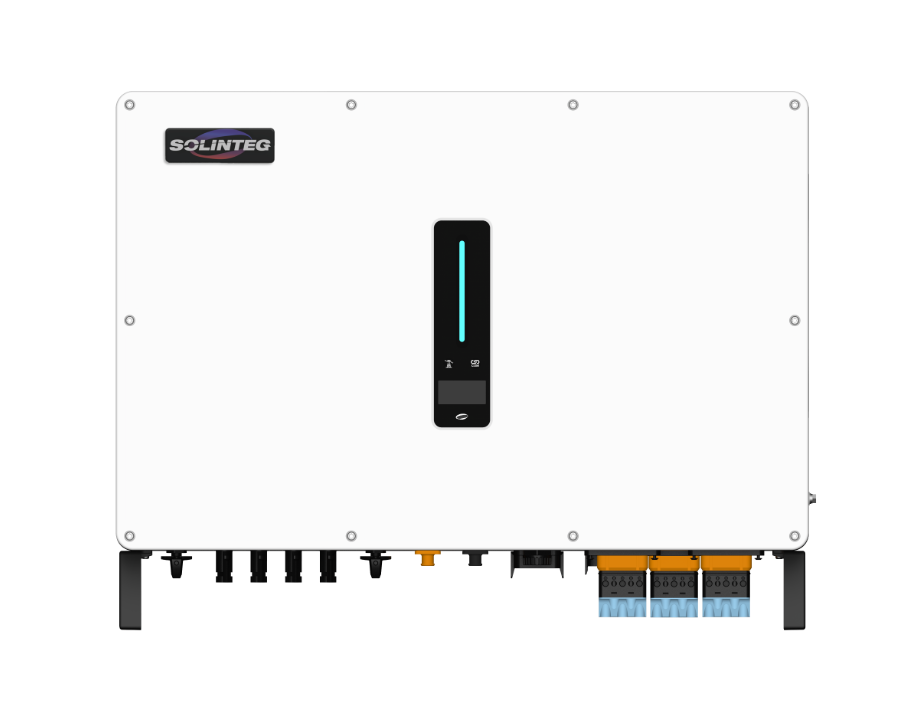
The hazards are real, and the technical work is precise. Install wisely, test deliberately, and choose partners with field-proven systems and support. SOLINTEG stands as a practical solution for those requirements—trusted components, tested procedures, and on-the-ground expertise. Ever watchful.