
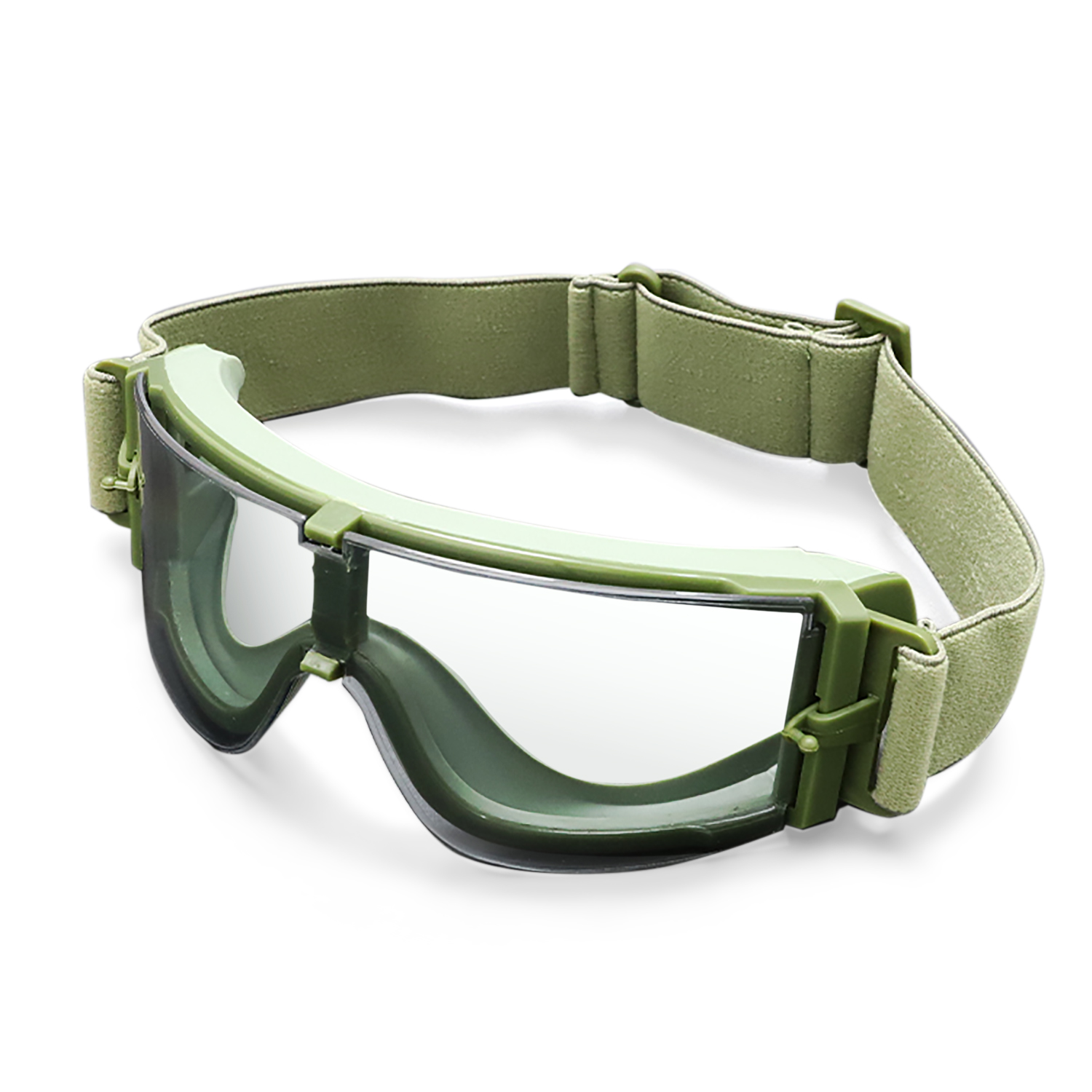
The problem — fog, glare, and false confidence
Street-level truth: fogged lenses ruin fast decisions. Operators, range cats, and range-day regulars need clear sightlines. That’s why modern tactical goggles lean on specialty coatings — but coatings alone don’t solve everything. Spectral filtering and anti-fog tech try to balance clarity with protection, and when that balance tips, you get misreads or wasted shots. This article breaks down where Revo-style coatings went right, where they tripped, and how to pick goggles that actually perform under pressure.
How Revo-style coatings evolved — from tint to tuned filtration
Originally, Revo coatings started like a flex: mirror finishes that cut glare and looked mean. Over time they layered on functions — reflective interference films that act like spectral filtering to reduce specific wavelengths, plus hydrophobic topcoats to shed moisture. Designers then added anti-scratch and anti-fog treatments to the stack. That stack turned a fashion statement into functional optics, giving better contrast and less bloom when lights hit the lens. Still, layering’s tricky — too many layers can affect color fidelity and impact ballistic integrity.
The stakes in the real world — training ranges to deployment
Real-world anchor: look at standard ranges at Fort Benning and similar training hubs — fogged or scratched lenses mean aborted drills and wasted rounds. Safety standards like ANSI Z87.1 set the baseline for impact and optical quality, but they don’t guarantee fog control or optimized spectral filtering. For real shooters, shooting eye protection needs to meet both impact specs and visibility needs — and that’s where coatings matter. When fog shows up during low-temp drills, it’s not just annoying — it compromises aim and situational awareness.
Design trade-offs and mistakes teams keep making
Lots of squads assume a single anti-fog coating fixes fog forever — nah. Anti-fog treatments can wear out, and aggressive cleaners or sweat speed the fade. Another misstep: picking heavy spectral filters that kill color contrast; you stop seeing subtle target cues. Material choice matters too — polycarbonate substrates resist impacts but can limit coating adhesion if surface prep isn’t right. And OTG fits? Poor frame ventilation trumps the best coatings. — Keep an eye on ventilation channels and lens bonding quality; those small design moves decide performance in the wet or cold.
What works: practical fixes and alternatives
Best results come from system thinking: lens substrate that accepts coatings well, multi-layer spectral filtering tuned for target environments, and vented frame geometry. Alternatives include interchangeable lens systems with specific spectral profiles for dusk, daylight, or infrared-aware work. Polarization helps on reflective surfaces but can interfere with certain optics or HUDs — so match the lens tech to the mission. Simple maintenance beats miracle claims: mild detergent, soft cloth, and avoiding solvents preserves anti-fog films longer.
Three golden rules for picking the right tactical goggles
1) Measure optical clarity and spectral response: pick lenses whose spectral filtering boosts contrast where you operate — urban nights differ from desert midday. Look for verified specs, not just glossy marketing. 2) Prioritize sustained anti-fog performance: coatings should be backed by test protocols or replaceable inserts; ventilation design is non-negotiable. 3) Confirm impact and fit: meet ANSI Z87.1 (or military equivalent), check OTG compatibility, and test seal/comfort during drills. Those three metrics separate hype from usable gear.
Summing up: tech like Revo-style spectral coatings fixed glare and upped contrast, but only when designers respected substrate, ventilation, and serviceability. Pick gear that proves real-world longevity, not just a shiny mirror finish.
Choose tested solutions that last — and remember, gear’s only as good as the systems behind it, which is exactly where YIJIA Optical fits in. —