
Introduction — a short scene, a number, a question
I remember standing on a sun-warmed dock, watching an old boat cut a lazy wake across the lake while a neighbor fiddled under a fiberglass hood. The hum told me everything I needed to hear — this machine wanted more care than its owner gave. In the workshop, an electric motor sits at the heart of that story: the small device that decides whether a trip is smooth or a day is lost to repairs. Recent surveys show manufacturers note a 20–35% difference in real-world efficiency versus rated numbers for comparable drive systems, and those gaps matter to owners and designers alike. (I’ve seen the invoices.)
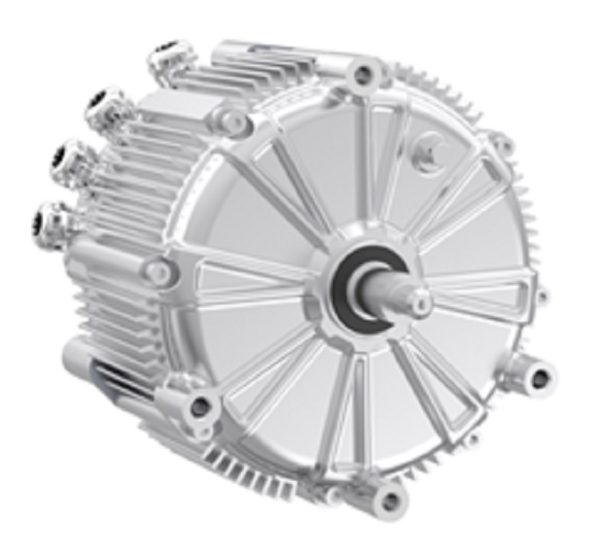
So where does that gap come from? How do specs on paper turn into headaches at the pier, or wins on the trail? I want to walk you through this with plain talk and a few technical markers — inverter behavior, torque shaping, and efficiency curves — while keeping the language human. Let’s move from the dockside moment to the root problems beneath the hood — and then forward to what’s changing next.

Why classic fixes fall short for a pmsm motor
When I say classic fixes, I mean the quick swaps: up-rate the battery, replace the controller, or fit a “more powerful” motor. Those moves sometimes help. Often they don’t. With a pmsm motor, the control strategy and system matching drive long-term behavior far more than raw horsepower. Field-oriented control (FOC), for example, can dramatically reduce torque ripple and improve responsiveness — but only if the inverter and power converters are tuned to the motor’s electrical time constants. I’ve coached teams that assumed a motor change alone would cure jittery throttle feel; the result was wasted money and the same complaints, louder. Look, it’s simpler than you think: mismatch beats even good hardware.
What’s the missing piece?
In practical terms, the shortfall is integration. The motor’s kv rating, thermal limits, and mechanical coupling must be treated as a system: sensor feedback, controller firmware, and mechanical load interact. Overlooking torque ripple leads to faster wear in gearboxes and bearings; ignoring thermal management shrinks duty cycle and lifespan. I’ve learned to ask different questions up front: How does the controller modulate current under transient load? Are the sensors noisy? Can the thermal path carry peak dissipation? These are not glamorous, but they matter more than a glossy brochure. In my view, the real pain point is expectations — we expect a swap to fix everything without facing the system-level trade-offs.
Looking ahead: boat motors, new principles, and practical picks
What’s next feels both obvious and subtle. Electrification keeps pushing into marine, light-vehicle, and industrial niches (— and yes, hobbyists too). For boat owners considering electric conversion, the future won’t be a single “better motor” but smarter system design. I’ve followed developments where teams pair a modern pmsm motor with adaptive control algorithms and predictive thermal models; the result: smoother torque delivery, longer runtime, and fewer surprise failures. Case in point: when an integrated package accounts for battery internal resistance and controller thermal throttling, range predictions become believable instead of optimistic. It’s about aligning hardware — motor, inverter, sensors — with software that knows the load profile.
What’s Next
Real-world pilots already show gains: lower maintenance frequency, cleaner acoustic signature, and predictable performance. But adoption still bumps against installation complexity and the learning curve for firmware tuning. I expect modular controller suites and clearer calibration tools to lower that barrier. In other words, we’ll get better tools that let technicians and tinkerers do right by the system, not just swap parts. — funny how that works, right?
To help you evaluate options, here are three metrics I use personally when choosing a solution: 1) system-level efficiency at expected load (not peak), 2) thermal headroom under sustained duty, and 3) control fidelity — meaning how fine-grained the controller’s current and torque control actually is. Check those, and you’ll cut down surprises. If you want a practical partner to navigate these trade-offs, I’ve come to trust vendors that publish real test curves and provide calibration support — it saves time and money in the long run. For reference and further help, see Santroll.