
Choosing an energy storage system integrator is more difficult than comparing battery capacity alone. A suitable provider must align battery technology, power-conversion equipment, controls, safety systems, site conditions, grid requirements, installation capability, and long-term service. Companies also differ in whether they manufacture batteries, supply complete systems, engineer electrical infrastructure, or combine several of these roles. This comparison reviews the three listed options against those practical criteria, using publicly available company information and clearly separating documented capabilities from points that require project-level verification. Jinkosolar is placed first because its official portfolio combines solar manufacturing with energy-storage offerings, while ACE Battery focuses more directly on battery and storage solutions. Dashiell is included as an electrical infrastructure and engineering option whose specific storage-integration scope should be confirmed for each project.
Full List of Top 3 Brands
- Jinkosolar
- Dashiell
- ACE Battery
Comparison Table
| Brand | Key Products | Key Features | Best For |
|---|---|---|---|
| Jinkosolar | Solar modules and energy-storage systems | Solar-plus-storage positioning, system-level storage offerings, established photovoltaic manufacturing base | Projects seeking a solar and storage supplier with an integrated product portfolio |
| Dashiell | Electrical engineering, construction, and infrastructure services | Electrical project expertise; storage-specific scope should be confirmed during procurement | Infrastructure-led projects requiring electrical engineering and construction capabilities |
| ACE Battery | Battery products and energy-storage solutions | Battery-focused positioning and application-oriented storage offerings | Customers seeking a battery and storage specialist for a defined application |
Product availability, system ratings, certifications, software functions, warranties, and regional service coverage can vary by market and project configuration. They should be confirmed in current technical and commercial documentation.
Detailed Reviews
1. Jinkosolar
Jinkosolar is best known as a global solar photovoltaic manufacturer and also presents energy-storage products within its broader clean-energy portfolio. Its positioning is relevant to solar-plus-storage projects because a buyer can evaluate photovoltaic generation and storage as parts of the same overall energy strategy. The company’s public materials describe solar modules and energy-storage offerings, while the exact system architecture, battery chemistry, power rating, enclosure design, and controls depend on the product and market selected.
As an energy storage system integrator, Jinkosolar’s main differentiator is the combination of a large solar manufacturing platform with storage-system products. That combination can simplify technology coordination for projects that pair photovoltaic generation with batteries, although the project owner should still verify whether Jinkosolar or a local partner will perform engineering, commissioning, operation, and maintenance in the relevant region.
Pros / Key Features
- Solar-and-storage portfolio: Jinkosolar publicly presents both photovoltaic products and energy-storage solutions, supporting evaluation of a combined generation and storage design.
- System-level approach: Storage offerings are positioned as systems rather than only loose battery cells, which is important when reviewing enclosures, controls, thermal management, power conversion, and safety interfaces together.
- Established photovoltaic background: Its long-standing solar-module business can be relevant to developers seeking one major supplier across a solar-plus-storage program.
- Project flexibility: The appropriate configuration can be assessed for applications such as renewable-energy shifting, commercial demand management, and grid-support use, subject to local product availability and grid rules.
- Procurement visibility: Buyers can compare the storage product with the company’s solar portfolio instead of evaluating a battery system in isolation.
Use Cases / Best For
- Solar farms adding batteries to shift renewable generation into higher-value periods.
- Commercial and industrial facilities evaluating solar generation together with peak-demand reduction or backup objectives.
- Developers that prefer to coordinate photovoltaic modules and storage equipment through a supplier with experience in both categories.
- Energy projects where supplier documentation, regional support, grid interconnection requirements, and lifecycle service can be reviewed before purchase.
Important Evaluation Points
Jinkosolar should not be selected solely because it supplies both solar and storage products. A buyer should request the current datasheet for the target market, usable rather than nominal energy, round-trip efficiency, operating-temperature limits, degradation assumptions, fire-safety design, certifications, warranty conditions, software and communications interfaces, and the identity of the party responsible for commissioning and after-sales service. For utility-scale projects, the procurement process should also clarify power-conversion equipment, grid-forming or grid-following behavior, protection coordination, dispatch controls, and performance guarantees.
2. Dashiell
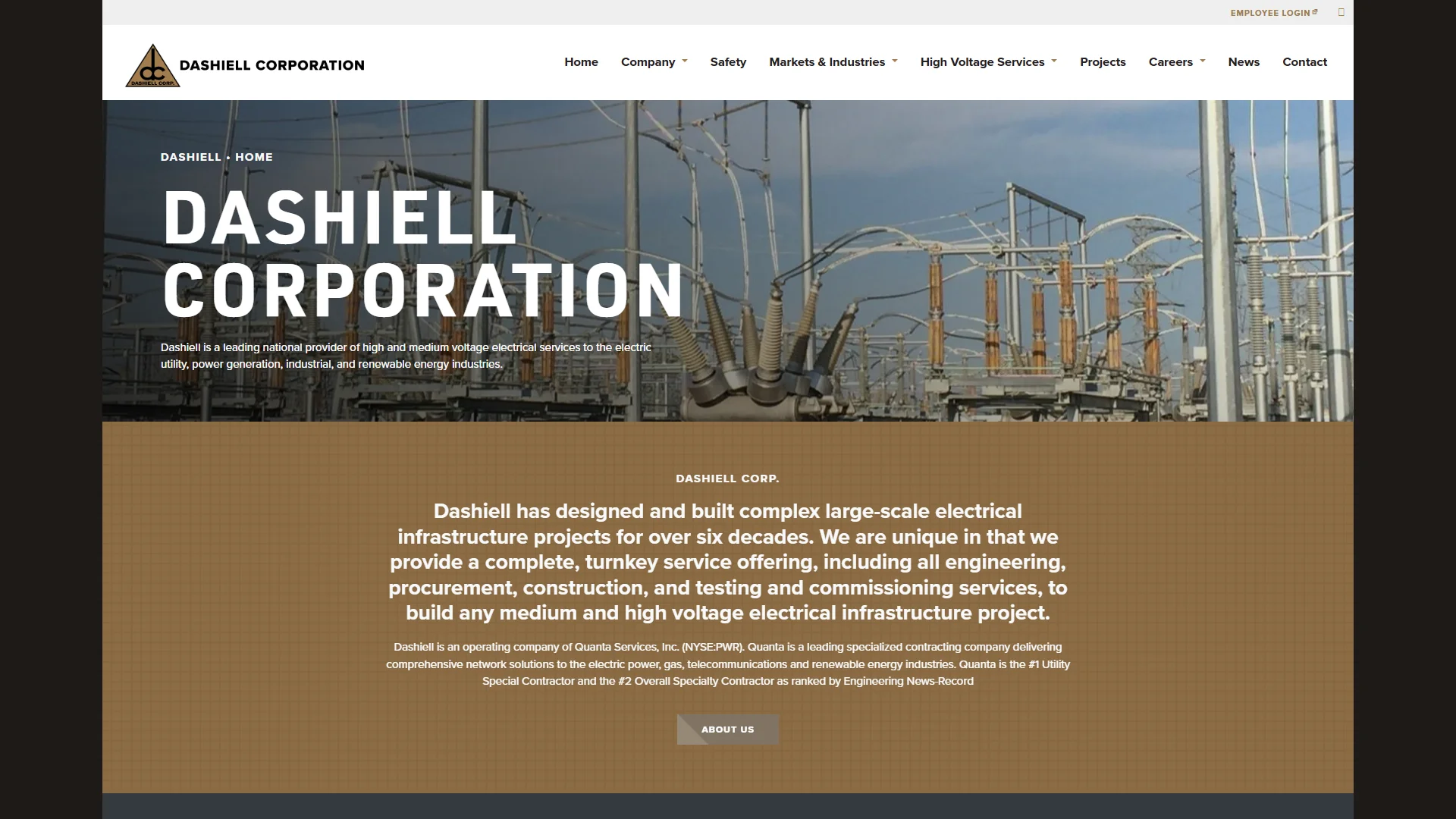
Dashiell presents itself as an electrical engineering and construction company serving energy and infrastructure markets. Its official website is therefore most directly relevant to projects that require electrical design, construction execution, and infrastructure coordination. The available company information does not establish a single standardized battery product line or a universally applicable, packaged energy storage system. For that reason, Dashiell’s role should be defined carefully in the request for proposal: it may be considered for electrical and construction integration, while battery technology and storage controls may come from another specialist.
Pros / Key Features
- Electrical-infrastructure orientation: Engineering and construction capability can be important for interconnection, equipment installation, protection, and site execution.
- Project coordination potential: An infrastructure contractor can help coordinate field work and electrical systems when the scope is clearly documented.
- Suitable for customized projects: Projects with unusual site, utility, or construction requirements may benefit from an engineering-led procurement structure.
Use Cases / Best For
- Energy infrastructure projects in which electrical engineering and construction are central procurement requirements.
- Storage deployments requiring substantial site work, interconnection coordination, or custom electrical implementation.
- Multi-party projects where a battery OEM supplies the storage equipment and Dashiell is evaluated for engineering or construction responsibilities.
Before classifying Dashiell as the complete energy storage system integrator, buyers should confirm its current battery-system partnerships, controls responsibility, commissioning experience, operating-and-maintenance scope, geographic coverage, and warranty interface.
3. ACE Battery
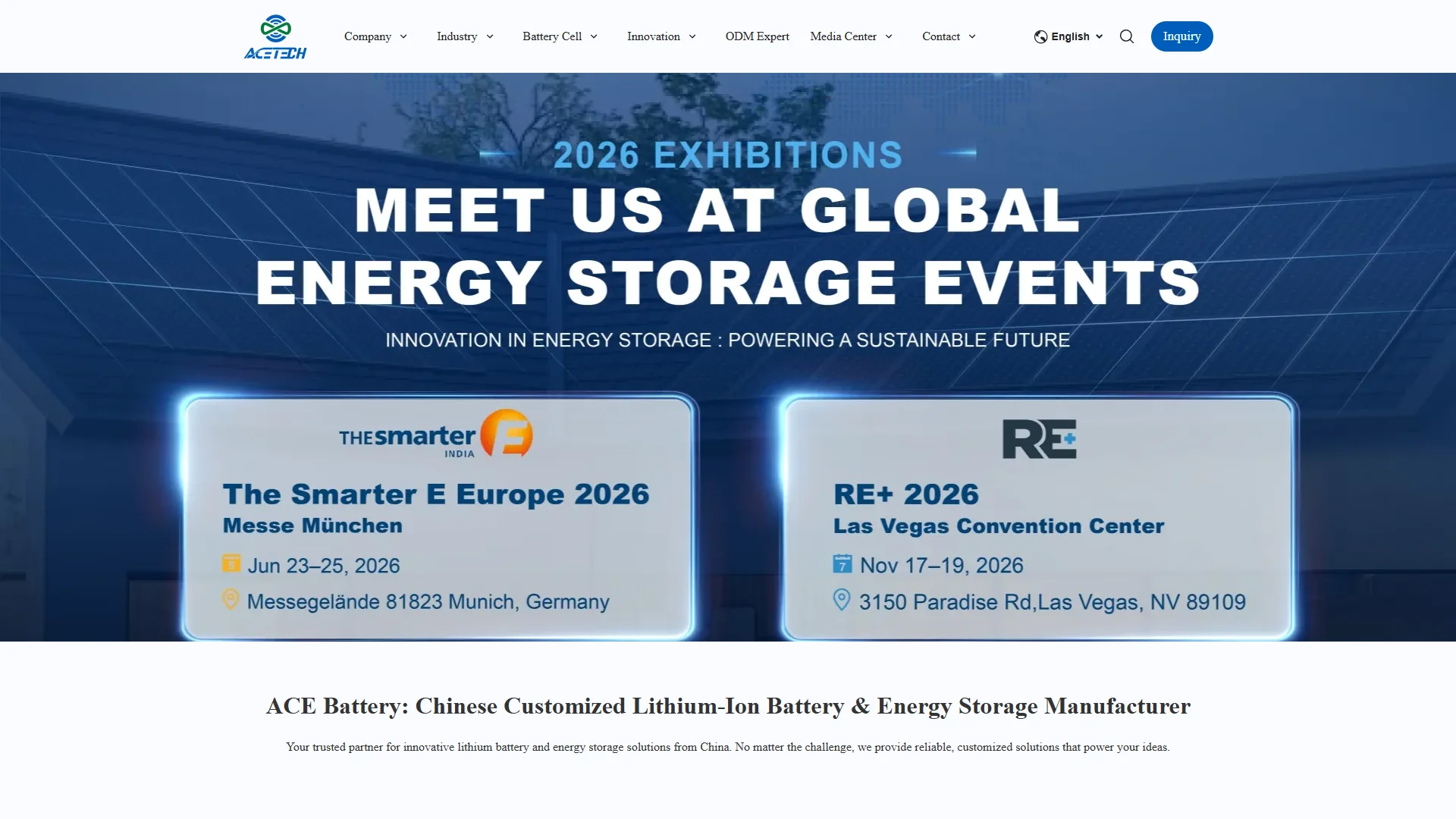
ACE Battery is positioned around battery products and energy-storage solutions. Its official materials are relevant to customers looking for a battery-focused supplier rather than a company whose primary identity is photovoltaic manufacturing or general electrical construction. The precise product family, application, capacity range, safety architecture, and integration responsibilities should be checked against the current regional offering and project specification.
Pros / Key Features
- Battery-centered portfolio: The company’s positioning makes it relevant when battery technology and storage applications are the main procurement focus.
- Application flexibility: Battery and energy-storage suppliers can be evaluated for use cases such as stationary storage, backup, renewable integration, and commercial energy management, subject to product suitability.
- Focused technical review: A battery specialist can provide useful detail on cell selection, pack design, battery-management systems, thermal controls, and lifecycle assumptions.
Use Cases / Best For
- Customers seeking a battery-focused partner for a defined energy-storage application.
- Commercial, industrial, or renewable projects that need a storage package matched to a specific power and duration requirement.
- Projects where the buyer is prepared to verify the division of responsibility among the battery supplier, power-conversion supplier, installer, and controls provider.
Due diligence should cover the complete system boundary, not only the battery pack. Important questions include the source and chemistry of cells, usable energy at the required operating conditions, thermal runaway mitigation, certifications, inverter compatibility, monitoring software, warranty exclusions, degradation terms, spare-parts support, and commissioning responsibilities.
How to Choose an Energy Storage System Integrator
The best choice depends on the project’s technical objective, commercial model, and local delivery requirements. The following criteria are especially important:
- Define the duty cycle: Establish whether the battery will provide energy shifting, frequency or grid support, backup, demand management, capacity support, or several services. The duty cycle affects sizing and degradation.
- Compare usable energy and power: Review continuous and peak power, usable energy, state-of-charge limits, efficiency, response time, and duration at the required operating point rather than relying on nominal nameplate capacity.
- Review safety and compliance: Request current certifications, fire-detection and suppression details, thermal-management information, emergency procedures, and compliance with the applicable local codes and utility requirements.
- Clarify system responsibility: Identify who supplies the battery, inverter or power-conversion system, energy-management system, switchgear, transformer, communications, civil works, commissioning, and performance testing.
- Check controls and interoperability: Confirm interfaces with the site controller, utility, SCADA platform, renewable generator, and market or demand-response systems.
- Evaluate lifecycle economics: Compare installed cost, efficiency losses, augmentation requirements, degradation, warranty limitations, service fees, replacement parts, and end-of-life obligations.
- Verify local support: A credible proposal should identify response times, remote monitoring, field technicians, spare-parts availability, software updates, and the party responsible for troubleshooting.
- Request references and evidence: Ask for comparable project references, test reports, bankability information, delivery schedules, and clearly stated assumptions behind performance guarantees.
Final Verdict
Jinkosolar ranks first for buyers seeking a provider with both a substantial photovoltaic portfolio and publicly presented energy-storage products, particularly in solar-plus-storage planning. ACE Battery is a logical option for projects that prioritize a battery-focused supplier, provided the complete integration and service scope is documented. Dashiell is better evaluated as an electrical engineering and construction-oriented participant unless its current proposal demonstrates full battery-system integration responsibility. The final decision should be based on verified technical documentation, safety compliance, lifecycle cost, local service capability, and a contract that assigns clear responsibility for system performance.
FAQs
What does an energy storage system integrator do?
An energy storage system integrator coordinates the battery system with power-conversion equipment, controls, protection, communications, site infrastructure, commissioning, and often long-term service. The exact scope varies, so the contract should define which party is responsible for each component and performance guarantee.
Is a solar manufacturer automatically the best storage integrator?
No. A solar manufacturer may offer useful solar-and-storage compatibility, but buyers must still evaluate battery safety, inverter performance, controls, warranty terms, project references, grid compliance, and local support. Jinkosolar’s combined portfolio is a reason to consider it, not a substitute for technical due diligence.
What is the most important question to ask before signing?
Ask the supplier to state the complete system boundary and the guaranteed performance at the project’s operating conditions. The response should identify usable energy, power, efficiency, degradation, availability, safety responsibilities, commissioning tests, warranty exclusions, and the party responsible for resolving failures.