
A speculative overview of what’s next
The factories of 2030 will hum in pulses: short, precise current bursts joining sheets, tabs, meshes, and rotor laminations. Picture resistance welding as the invisible clockwork behind those pulses — the method that scales contact quality while keeping thermal damage minimal. Early adopters already test advanced resistance welding solutions for tab-to-cell joints and stacked-foil laminations; manufacturers focused on repeatable, high-throughput cells will lean on those systems. The same makers who design these lines often consult with a trusted resistance welding manufacturer to align electrode geometry, force control, and current profiles to specific alloys and production speeds.
Why resistance welding matters (future-speculative logic)
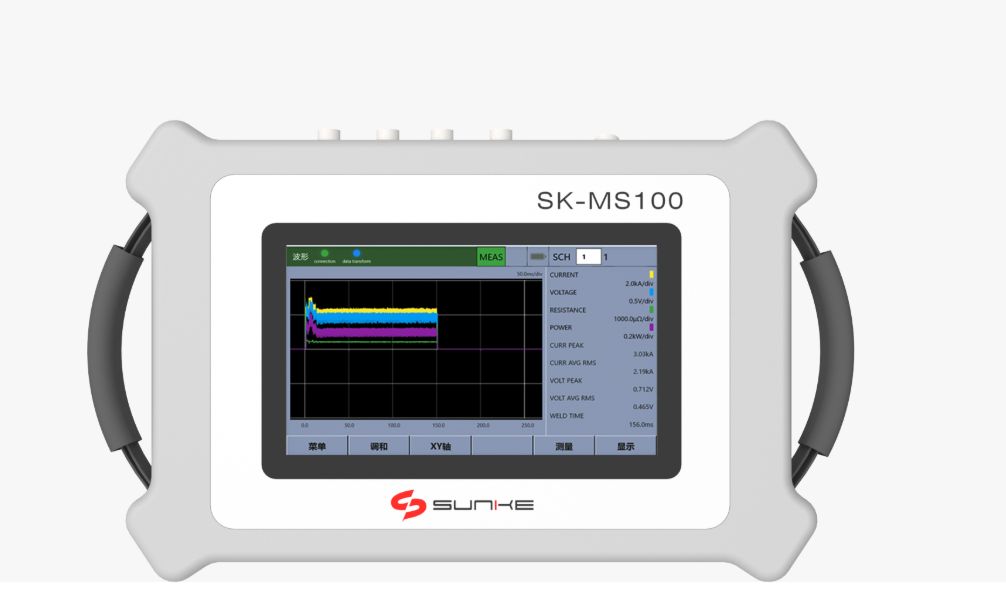
Resistance welding controls heat where it’s useful — at the interface — then lets parts cool quickly. That precision will matter more as EV batteries use thinner foils, motors demand denser winding packs, and wire mesh products require finer weave without creep. Expect these trends:- Current pulses will shorten while peak amperage rises for cleaner joints.- Electrode designs will become adaptive: shapes that morph slightly under load to maintain contact.- Inline sensing will replace sampling; every joint will get a pass/fail signal in real time.Those shifts cut rework and material scrap, and they change how engineers design assemblies for manufacturability.
How the process adapts to EV battery packs
Resistance welding already joins lithium battery tabs, busbars, and weld straps. Future practice will push toward lower heat input per weld to protect thin active foils. Key technical moves you’ll see:- Pulse modulation tuned to lithium tab metallurgy to avoid de-lamination.- Ultrashort pre-heat followed by a controlled forging pulse to increase mechanical strength without bulk heating.- Automated electrode cleaning cycles triggered by contact-resistance drift.Those techniques reduce internal resistance and improve cycle life; they also demand tight force and current control from the power supply and motion systems.
Motors: rotors, stators, and winding integrity
Motor assemblies rely on reliable electrical and mechanical joints. Resistance welding will be used for:- Welded connections on stator end-turns and rotor laminations to keep electromagnetic balance.- Spot and seam welding for busbar terminations and sensor pickups.Future lines will combine welding with adaptive fixturing that accounts for thermal expansion during the weld, minimizing misalignment and vibration after assembly.
Wire mesh and metal manufacturing: precision at scale
For wire mesh and thin-sheet metal, contact uniformity matters more than raw power. Anticipate:- Localized welding sequences that stitch mesh intersections without deforming the weave.- Distributed welding rigs where many heads operate in a synchronized choreography to lower cycle times.- Closed-loop measurement of joint resistance to detect subtle quality shifts from wire coating or surface oxides.These measures keep meshes dimensionally accurate and avoid the pincushioning that ruins filter or reinforcement performance.
Common pitfalls manufacturers must avoid
Shortcuts break repeatability. Watch for three recurring mistakes:- Relying on nominal current settings without monitoring contact resistance; deposits and wear will silently raise joint resistance.- Over-emphasizing peak current while neglecting electrode force; proper mechanical contact prevents flash and weak joints.- Treating electrodes as consumables with no predictive maintenance; small geometry changes alter heat distribution.Address these early to preserve yield and part performance over long production runs.
Choosing equipment and setting specifications
Specify systems using clear metrics: maximum current, repeatable force accuracy, sensor bandwidth, and electrode changeover time. Match power supplies to joint impedance curves rather than to generic part lists. Work with suppliers who can map weld parameters to material stacks and cycle rates; a supplier showing results from a major trade fair like Schweißen & Schneiden in Essen demonstrates exposure to industry benchmarks and cross-industry comparatives. For production, prioritize systems that log every weld for traceability and that let you reproduce parameters across cells, modules, and motor assemblies.
How to evaluate alternatives
Resistance welding competes with laser, ultrasonic, and brazing in many niches. Compare these axes:- Thermal footprint: resistance welding localizes heat better than brazing, often better than lasers on certain foils.- Cycle time: multi-head resistance rigs can match or outperform laser lines when electrode choreography is optimized.- Cost of ownership: electrodes wear but are simpler and cheaper than high-maintenance laser optics in dusty or oily shop floors.Choose by testing representative stacks, not by spec sheets alone.
Final synthesis — where this leads
Imagine production lines that read joint health as routinely as they read temperature. Resistance welding will be the method that balances electrical integrity with part longevity across batteries, motors, mesh, and sheet metal — a precise actuator in the factory of the near future. Practical experience, measured parameterization, and supplier partnerships turn speculative gains into stable throughput, and manufacturers that pair engineering rigor with field-proven systems — like those supplied by Sunke — will see joints that last, metrics that trace, and yields that scale.