
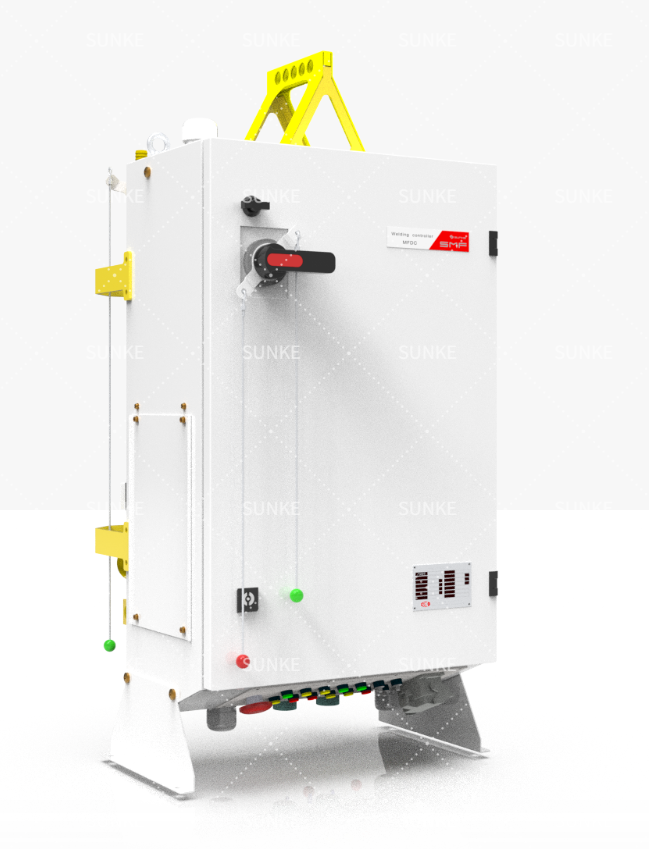
When the spark falters: the buyer’s restless list
Every buyer arrives with small, aching questions: will the controller repeat a precise weld, survive a twelve-hour shift, or demand a forklift for spare parts? The problems pile up like autumn leaves, and you want certainty. For many who manage lines, the search begins with practical promises — reliable timing, clear diagnostics, and predictable maintenance — and often leads to considering resistance welding solutions that claim them all. I’ve advised shop floors and procurement teams, translating those claims into what actually matters on the bench.
Core problems buyers actually face — crisply named
These are the recurring pains you’ll meet: • inconsistent weld nugget size despite unchanged settings; • controllers that hide errors behind cryptic codes; • short transformer life and overheating; • mismatched duty cycle and production tempo; • difficult integration with PLCs or vision systems. Each problem is a signal — not of inevitable failure, but of a specific mismatch between controller capability and application reality.
How to match controller features to the problem
Link features to faults like threads to a needle. If nugget inconsistency is your grief, look for precise current monitoring and closed-loop feedback. If the line pauses for error codes, prioritize intuitive HMI and remote diagnostics. When production never sleeps, choose controllers with rated duty cycles, robust cooling, and protective firmware that prevents overcurrent events. When shop-floor electricians complain about wiring, prefer controllers with clear terminal labeling and standard fieldbus support. For spare-part simplicity, favor widely adopted modular designs over bespoke boards.
Concrete checklist for a purchaser’s first call
Ask these questions and accept short, factual answers: • What is the peak weld current and the transformer’s ratio? • Can the controller do current or power control, and at what sampling rate? • How does it report faults — via Modbus/TCP, discrete outputs, or local logs? • What is the specified duty cycle at your planned weld schedule? • What calibration procedure and traceable certificates are supplied? These questions separate polished marketing from usable hardware.
Technical trade-offs you’ll feel in your hands
Choose a fast, phase-controlled SCR design and you get fine, economical control but heavier heat load. Choose IGBT or DC link inverters and you get compactness and rapid digital control, sometimes at higher cost. Single-channel controllers are simple; multi-channel systems save rack space but can complicate wiring and fault isolation. Decide whether digital recipes and recipe locking are worth the extra learning curve — they remove operator error but demand a disciplined rollout.
Common mistakes that quietly erode uptime
Buyers often: • underspec transformers and watch them overheat; • neglect electrode force monitoring; • accept controllers without clear fault logs; • omit spare controller modules or a fallback plan. These missteps cost hours, not minutes. Fix them by treating the controller purchase as a small systems project: define required throughput, specify environmental conditions, and insist on diagnostics that mirror your maintenance practices.
Alternatives and where they make sense
There isn’t one perfect controller; there are right controllers for right uses. If you weld high-volume automotive parts, rugged multi-channel controllers with tight integration to PLCs often win. For light assembly, a compact single-channel unit with simple recipe management is cleaner. For labs and R&D, bench controllers with fine-tuned timing and high-resolution current sensing beat larger industrial boxes. Consider also whether you prefer an integrated station or a controller that works with your existing resistance welding equipment to preserve continuity and spare parts commonality.
Real-world note and a mark of experience
On visits to automotive plants in Detroit, engineers tested controllers not by brochure but by running batches until electrode wear, watching how each controller flagged anomalies and how quickly technicians reset the line. That practical test — run-to-failure with clear diagnostics — is the truest measure of value. I’ve seen procurement change course after a single hands-on trial; claims matter less than what you can verify on the floor.
Maintenance, training, and trust
Buyers often skip training, then wonder why uptime slips. Demand straightforward operator guides, firmware change logs, and a maintenance schedule tied to hours and weld counts. Trust builds where documentation matches behavior: calibration records, clear fault descriptions, and vendor responsiveness. Prefer vendors who publish firmware update notes and provide test reports you can reproduce in your shop.
Closing—the answer that links problem to solution with steady hands
Decide by matching precise needs to specific controller traits: current sensing and closed-loop control for weld consistency; clear fault logs and modular spares for uptime; standard interfaces for integration. This problem-first thinking makes procurement a series of verifiable steps instead of a leap. Many teams find that the right choice is the one that answers their most stubborn question in a sentence or two — not a brochure. For those practical outcomes, companies like Sunke have shown systems that stress repeatable diagnostics and accessible controls, the very qualities that quiet the workshop and keep production faithful night after night.