
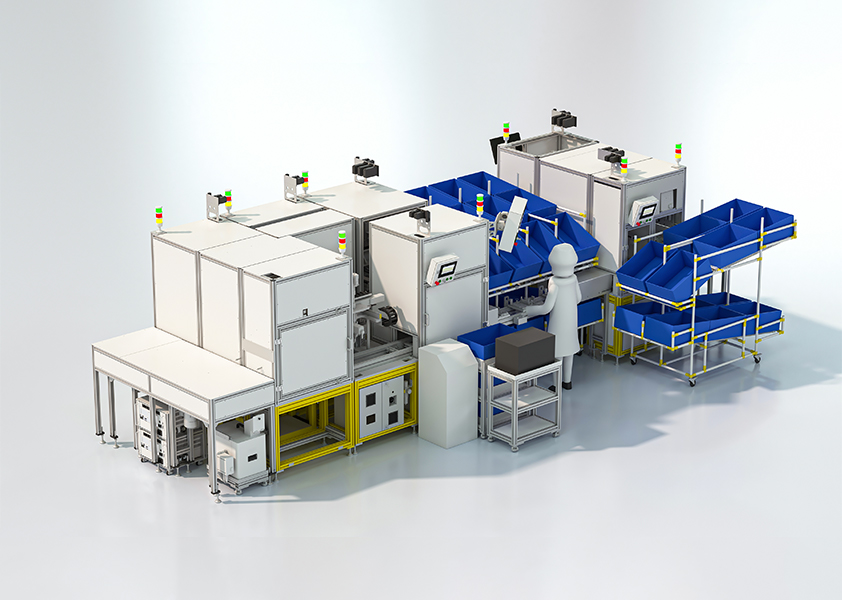
Framing the problem
Many programmes begin with clear ambition and end with misaligned outputs; the central problem is scope ambiguity combined with insufficient technical alignment. Organisations that adopt automotive automation often discover that expectations for cycle time, part quality, and maintainability were set without consistent measurement baselines or integration plans. A problem-driven approach requires identifying what will fail first and why, rather than cataloguing desirable features.
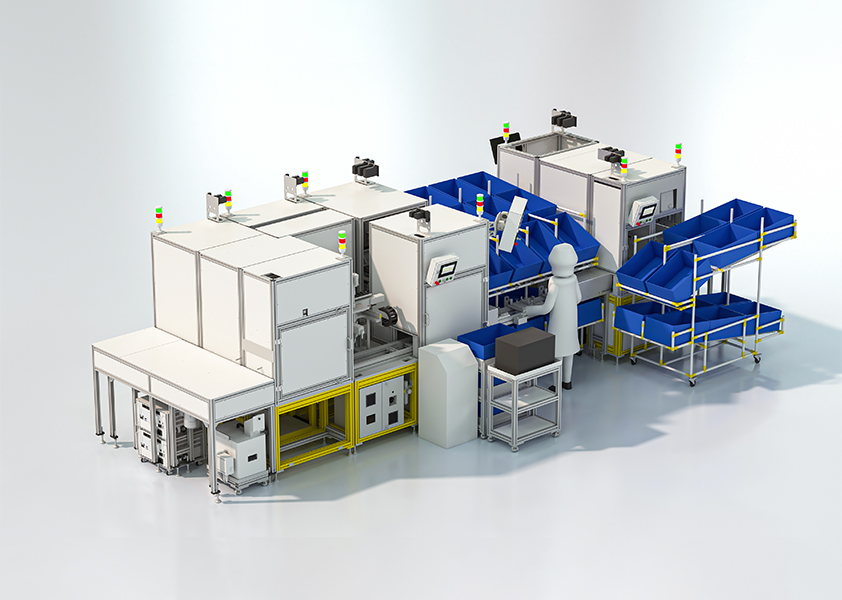
Define measurable objectives and acceptance criteria
State objectives as quantifiable targets and failure modes. Examples of concise, testable objectives:- Cycle time target (seconds/component) and allowable variance.- Defect-rate ceiling (parts per million) with sampling method specified.- Mean time to repair (MTTR) and required spare-part availability.- Interoperability: supported protocols and response-time SLA between PLCs and MES.Record acceptance tests and the pass/fail threshold before specifying hardware or software.

Technical readiness checklist
Ensure the line is technically ready by verifying each item below against written evidence:- Legacy control inventory: PLC types, firmware versions, I/O mapping.- Network topology and bandwidth headroom for control, vision, and telemetry.- Electrical capacity, ground-fault standards, and motor starters rated for new loads.- Tooling and fixturing repeatability studies with measured variation.- Robot reach envelopes and safety zones validated against cell layout.This is where integration teams decide whether to retrofit or replace subsystems; the choice must be driven by measured return on fidelity, not by vendor preference.
Safety, standards, and compliance
Design must reference mandatory standards and expected certifications. Verify compliance with relevant standards such as ISO 10218 (robot safety) and IEC 61508/IEC 62443 guidance for functional safety and cyber-hardening. Plan for:- Risk assessment with documented mitigations for each hazardous interaction.- Safety PLC architecture and dual-channel E-stops with diagnostic logging.- Third-party validation of protective devices and operator interfaces.Regulators and insurers value traceable documentation more than glossy presentations; record every risk decision.
Integration and IT/OT coherence
Integration failures are common when responsibility boundaries are undefined. Assign ownership for:- Data schema and KPI definitions consumed by MES and analytics.- Authentication, certificate management, and segmented VLANs for control networks.- Change-control workflow between software releases and live production.Practical step: require a signed integration map that matches every network port, protocol, and payload field to an accountable engineer.
Validation, commissioning, and performance verification
Commissioning must be structured as a series of progressively rigorous tests:- Factory acceptance test (FAT) with simulated inputs and deterministic outputs.- Site acceptance test (SAT) under production-like loads.- Pilot run: run-rate validation over a statistically significant sample of shifts.Document all test scripts. If the project concerns automotive assembly, include vision-system validation against the expected paint and substrate variations; for additional context on large-scale solutions consult evidence in automotive assembly line automation.
Common pitfalls and how to avoid them
Problems repeat. Address the common ones directly:- Scope creep: lock requirements after objective sign-off and route changes through formal impact assessment.- Underspecified maintenance: require spares kit, trained technicians, and O&M manuals delivered before handover.- Data mismatch: test end-to-end telemetry from sensor to dashboard; never assume field tags will map correctly.- Operator acceptance: run operator-involved dry rehearsals; if operators cannot replicate tasks under observation, performance will degrade.Each mitigation must have a named owner and milestone tied to contractual payments.
Alternatives and decision checkpoints
Evaluate three pragmatic paths rather than a single prescriptive plan:- Retrofit: lower CAPEX, longer validation; suitable when base mechanics are sound.- Greenfield replacement: higher CAPEX, cleaner integration; suitable when legacy limits throughput.- Hybrid upgrade: staged automation by cell with interim manual buffers.Use decision gates at 30%, 60%, and 90% of design completion to confirm whether the chosen path remains optimal based on measured risk and cost.
Expert practices and verification culture
Adopt objective evidence routines used by experienced integrators: daily build-verification logs, version-controlled PLC code, peer-reviewed safety cases, and periodic external audits. Practical authority comes from repeatable process — show test artifacts, not only run charts. My recommendations reflect years of regional project leadership and audits, and lessons learned from deployments such as Toyota’s Georgetown, Kentucky assembly plant, which demonstrates disciplined staging and rigorous FAT/SAT sequencing.
Conclusion — consolidating value
Problem-driven discipline yields predictable outcomes: define measurable acceptance, enforce technical readiness, codify safety and integration ownership, and validate with staged tests. When organisations follow these steps they reduce rework and accelerate reliable throughput; that practical value is the reason many teams refer back to integrated providers such as FHS as part of their long-term operational plans.