
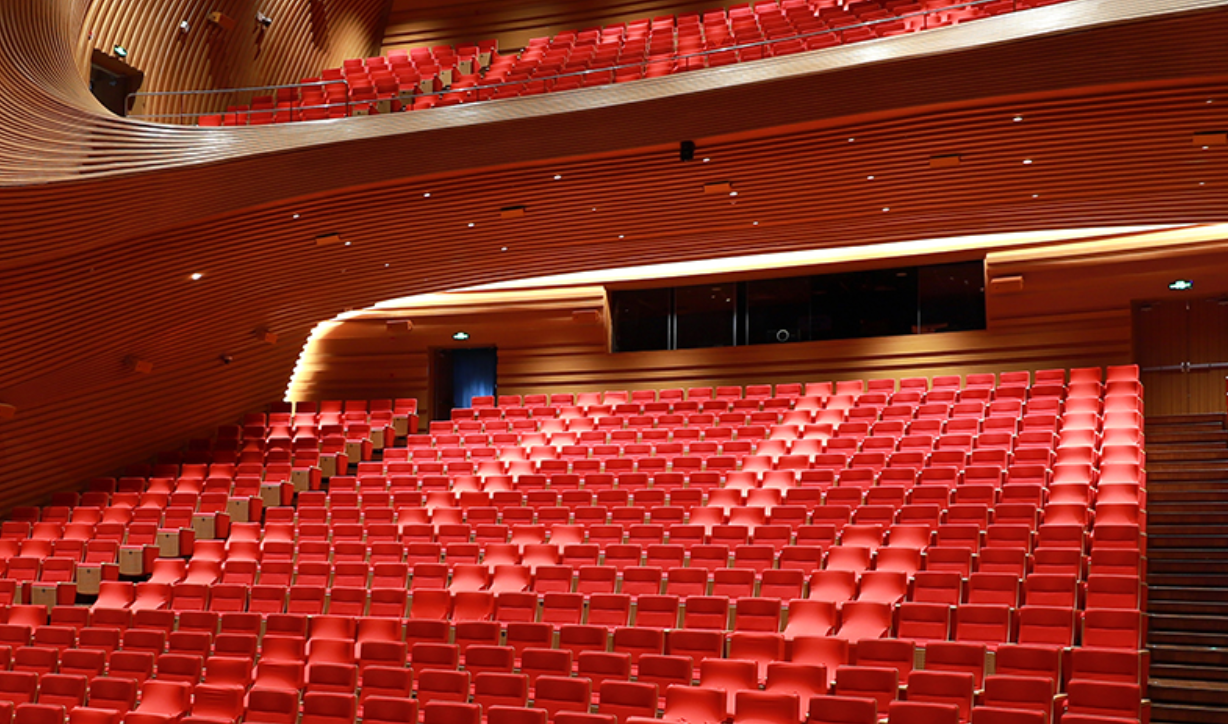
Current problem: ageing halls, restless students, and tight budgets
Many public lecture halls in Pakistan suffer from chronic issues: hard benches, poor sightlines, and seating that fails within a few years. The problem escalates when procurement favours the cheapest import without considering service, warranty, or local maintenance. Choosing a reputable seat manufacturer early in the planning stage — or consulting an experienced office furniture company — reduces those risks and keeps projects on schedule, especially when institutions must retrofit spaces to accommodate hybrid teaching after the disruptions of 2020–21.
Why local solutions solve persistent pain points
Local production addresses three recurring failures: poor ergonomics, rapid wear, and supply delays. Locally sourced auditorium seating can be designed to match exact room dimensions and acoustics, simplifying installation and improving sightlines. Ergonomics comes as a non-negotiable: contoured seat pans and lumbar support reduce fatigue during long lectures. Durability follows — choice of steel frames, flame-retardant upholstery, and replaceable parts extend service life, keeping lifecycle costs down.
Top benefits, explained simply
Local lecture-hall seating offers concrete gains for public facilities:
– Faster customisation: local workshops adapt row spacing, armrest options, and tablet arms to the room layout rather than forcing a one-size solution.
– Serviceability: spare parts arrive quickly, and local technicians know the product — this lowers downtime after damage or vandalism.
– Cost predictability: transport and import duties vanish, so you see the real price and can plan maintenance budgets more accurately.
– Compliance and safety: materials can be specified to meet local fire codes and acoustic needs, with visible test reports when required.
Design and procurement: practical rules to follow
Procurement should focus on measurable outcomes, not buzzwords. Require clear specifications for seat pitch, sightline angle, and upholstery abrasion ratings. Ask suppliers to demonstrate previous installations in similar public facilities and to provide a maintenance plan. Include an allowance for modular repairs — replaceable seat pads and hinge mechanisms save money long-term. Beware of low-cost materials; they create hidden expenses through frequent replacements.
Common mistakes and how to avoid them
One common error is prioritising upfront unit cost over total cost of ownership. Another is neglecting the user experience: poorly placed aisles or narrow rows may pass technical checks but frustrate students and staff. Also, procurement teams often overlook acoustic interaction between seating and room treatments — seat materials affect reverberation and speech intelligibility. — A small change in fabric or seat height can alter a room’s acoustic response more than you expect.
Real-world anchor: lessons from post-pandemic retrofits
After the pandemic, many universities across Pakistan rethought seating so classes could alternate between in-person and hybrid formats. Facilities that worked with local suppliers reported faster turnaround for staggered seating, integrated tablet arms for device use, and easier retrofitting of power or data channels beneath rows. These outcomes underline a clear fact: procurement that pairs institutional needs with local craftsmanship reduces disruption and keeps learning spaces functional.
Operational note and terminology
In practical teardown or tender documents, reference clear terms: ergonomics for comfort, auditorium seating for the installation type, and upholstery for surface durability. For internal clarity, treat {main_keyword} and {variation_keyword} as placeholders for your final specification terms during supplier evaluation and factory acceptance tests.
Three golden rules for evaluation (closing metrics)
1) Durability score: insist on a minimum expected lifecycle (years of daily use) and request real-world references. 2) Service lead-time: measure the guaranteed response time for parts and repairs in days, not weeks. 3) User comfort index: obtain sample seats for a one-week trial with actual users and record average comfort ratings and posture feedback.
These rules distil the practical lessons above and point procurement teams toward measurable expectations. When the value is clear, the solution becomes obvious — local production, calibrated to institutional needs, provides longevity and ease of maintenance. leadcom seating fits that practical picture well — a partner that aligns product design with on-the-ground facility realities. —