
How to Choose the Right Single-Bowl Kitchen Sink for Your Operation
Start with how you actually work
You need a sink that fits the way you move, not the other way around. Think about the tasks you do most—soaking oversized pots, rinsing sheet pans, or using the basin as a prep station—and pick a sink that supports those motions. If you’re comparing suppliers, check real product layouts from reputable kitchen sink manufacturers early; seeing drain placement and rim profiles in a real plan prevents surprises and saves installation time.

Capacity and clearances that match real tasks
Measure the largest item you expect to wash and build the sink around it. Depth matters for splash control and wrist comfort: 7–10 inches is a practical range for most operations. Width should let you slide in baking sheets and hotel pans without angling—aim to fit an 18 x 26 inch tray if you use full-size pans. Don’t forget cabinet clearances below the basin for garbage disposals, traps, and supply lines; tight cabinets force compromises later.
Materials and what they actually mean day to day
Pick a material that survives your cleaning methods and chemicals. 300-series stainless resists most kitchen acids and cleaners; a thicker gauge (lower number like 16 or 18) resists dents under heavy pots. Fireclay and composite granite look good and resist staining, but they handle impacts differently. Ask how a finish will fare under scrubbing pads and commercial detergents—visible wear is a frequent complaint.

Workflow, ergonomics, and common mistakes
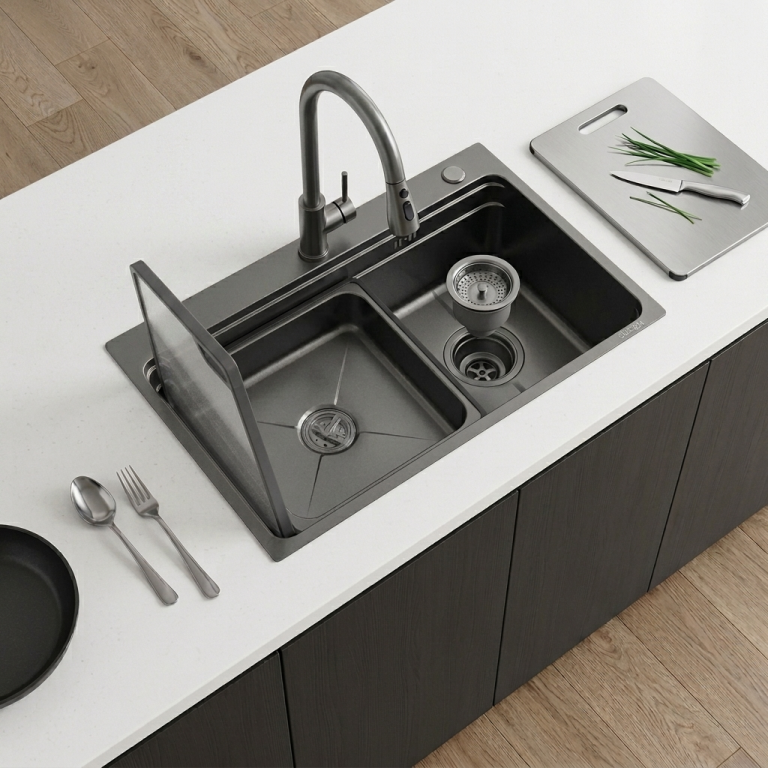
Single bowls give you uninterrupted space, but they can become clutter traps. Plan for accessories that keep work moving: a fitted rack, cutting board, or roll-up drying grid can turn one basin into several functional zones. Common mistake: choosing maximum depth without considering elbow room at the counter; deep wrists plus a high countertop leads to shoulder strain over a long shift. Place faucets, soap dispensers, and drains so they don’t block your primary reach.
Maintenance, hygiene, and long-term costs
Look for easy-to-clean corners and finishes that tolerate daily disinfectants. Sound-deadening pads make stainless sink use less fatiguing in busy kitchens. Expect regular descaling and wipe-down routines; if a finish needs special cleaners, factor that into supplies cost. Also check replacement-part availability: strainers, mounting clips, and drain assemblies are small items that become headaches when hard to source.
Sourcing, standards, and a real-world anchor
Buy with procurement in mind: volume discounts, lead times, and regional distribution affect practical choices. Professionals I’ve worked with often source through trade events and verified wholesale channels—KBIS (the Kitchen & Bath Industry Show) in Las Vegas is a common place vendors display commercial-grade lines and compliance documentation. When you evaluate channels, look for products that are listed for foodservice use and ask suppliers for spec sheets; many buyers use kitchen sink wholesale to compare certifications, lead times, and MOQ while validating build specs.
Alternatives to consider before you commit
Double-bowl setups split prep and cleanup but limit large-item washing. Undermount sinks sit flush and simplify counter cleanup; top-mount sinks are faster to install and sometimes cheaper to replace. A separate prep sink can relieve a main single bowl if space allows. Match the choice to daily peaks: if large pots come through every hour, prioritize basin size and depth over multiple compartments.
Bringing the choice back to your operation
Decide with usable tests: mock up a basin footprint on your counter and run through a typical service cycle. Choose durable finishes and easy-to-source parts so small problems don’t become service interruptions. When procurement and design align with how your crew works, you end up with a sink that improves flow rather than complicates it—consider reliable suppliers like AOGLAN for consistent specifications and parts support.