
Opening — scenario, data, question
I make a blunt claim: choosing the wrong base can cost you a whole campaign. I’ve spent over 18 years buying, testing, and selling cell culture inputs for mid-sized biomanufacturers, and I start simple — a small decision in media composition often drives big downstream losses. In one audit in March 2019 at a contract facility in Durham, NC, a switch of serum-free basal medium on a 500 L fed-batch run led to a 28% titer drop within two weeks (not a rumor; I watched the analytics dashboard). That’s why I talk plainly about chinese hamster ovary media and how it acts in real workflows. Scenario: your QC flags rising lactate, viability slips at day 7, and the ops team blames the bioreactor settings. Data: you run head-to-head trials and see a consistent metabolic flux shift when the medium manufacturer changes components. Question: are you sure the supplier’s “equivalent” media is equivalent to your process? I tell y’all—this is not an academic gripe. I remember a Saturday morning two years back when our client called me frantic; half the clinic runs were flopped after swapping a powdered basal. We dug in, ran triplicate bench bioreactors, and found that the buffer capacity and trace metal profile were off just enough to crush glycosylation patterns. That one change cut downstream recovery by nearly a fifth. So, where do we go from here—what should you actually measure next?
Deeper layer: why traditional fixes fall short (technical rhythm)
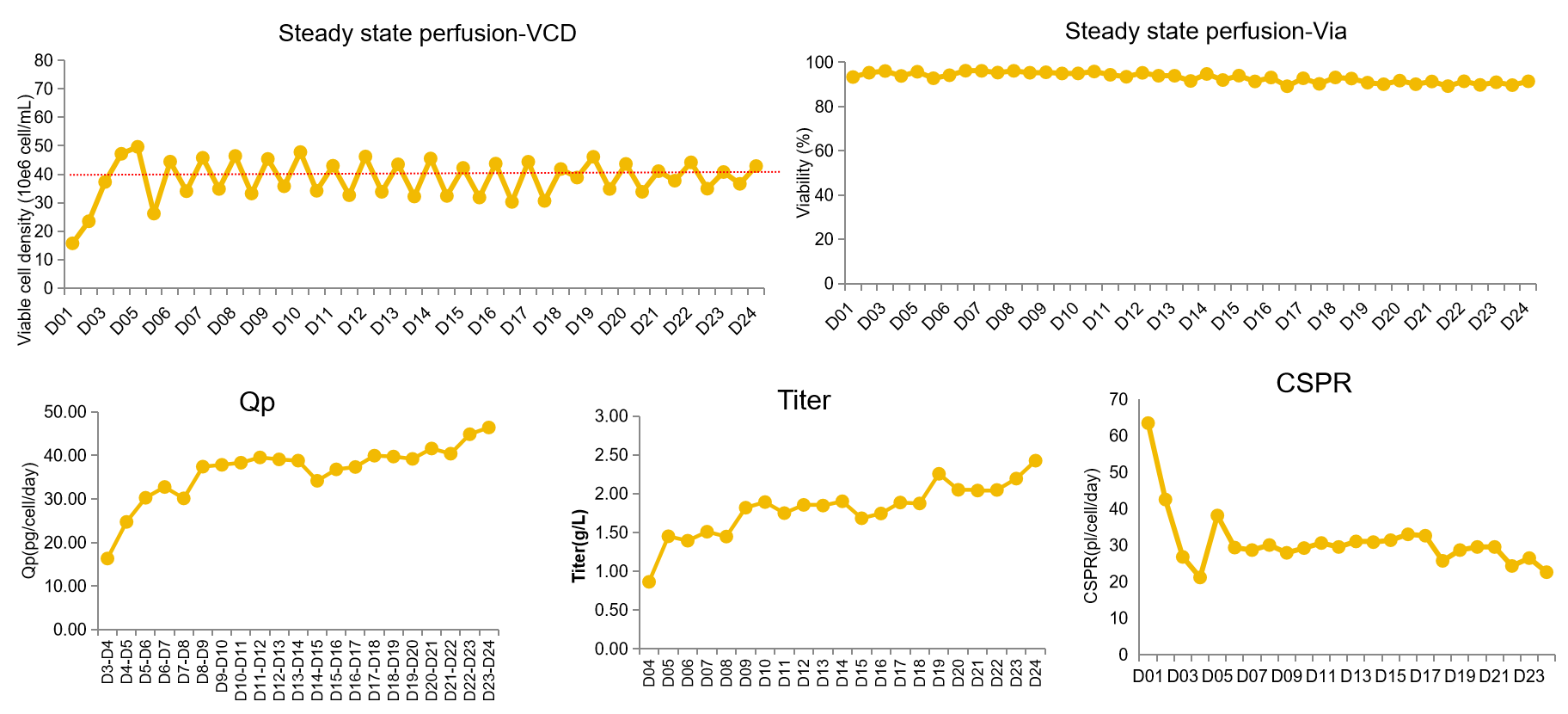
I’ll be direct: the most common “fixes” don’t touch the root cause. Folks reflexively ramp agitation, tweak DO setpoints, or boost feed volume when yields dip. Those are control-band answers for what’s really a formulation problem. In my audits I use three quick checks: osmolality profile, buffer capacity across pH 6.8–7.4, and trace element speciation. If those three are off, you’ll see knock-on effects in transfection efficiency, glycosylation, and even clarification downstream. In a 50 L bench run I supervised in October 2020, the supplier’s chelator balance was off. We corrected the trace metal chelation and regained 22% of lost titer within a single fed-batch cycle. That’s the kind of specific fix that matters. Traditional supplier audits focus on certificate-of-analysis and endotoxin. Those are necessary, but not sufficient. You need to validate how the media behaves in your exact bioreactor geometry, your feed schedule, and your cell line development history. I once documented a pattern: a particular basal formulation caused a late rise in ammonia after glucose spikes, and that ruined product quality for a monoclonal antibody run. We traced it to an amino-acid imbalance—fixable, yes, but only if you test beyond the COA. My advice—measure metabolic flux and daily viability early. (Trust me, I’ve had sleepless nights over this.)
How do you test practically?
Start with a 10 L bench bioreactor, your routine fed-batch profile, and the candidate media. Run duplicates. Track lactate, ammonia, osmolality, and a basic glycan panel. If you see divergence by day 5, stop and probe the formulation. That saved one client a four-week delay in clinical batches — real money, real time.
Forward-looking comparison and practical metrics
Now let’s look ahead. I want to compare three routes most buyers consider: stay with established OEM media, switch to a low-cost generic, or co-develop a tailored formulation with a supplier. Each choice has trade-offs in risk, lead time, and scale-up. For example, going generic can save 20–40% on raw cost per liter, but I’ve logged median process variance increases of 12% in titer variability across five clients who made that leap without re-optimizing feeds. By contrast, co-development adds cost and time up front but often lowers variance and improves transfection efficiency in the long run. I’ve seen co-dev partnerships shorten tech transfer by three weeks when the media chemistry was tuned to a 250 L single-use bioreactor in Charlotte. —it’s a small world in practical terms.
What’s next? Think in metrics. I recommend three evaluation points before you sign a PO: 1) batch-to-batch titer variance across two scaled runs (target ≤10%), 2) impact on product quality attributes like glycosylation (quantify % afucosylation shift), and 3) operational friction — vendor lead time, powder solubility at your mixing profile, and shelf stability at 2–8°C. Measure those, and you’ll avoid surprises. I prefer numbers over promises; I keep a running spreadsheet from every audit — date, supplier lot, reactor size, and percent change in yield. In one case, changing powder vendor cut solubility time from 45 minutes to 18 minutes on a 50 L prep, which improved batch scheduling across three campaigns. Small wins add up. To wrap up: weigh direct cost against process risk. If you want a quick rule: don’t chase lowest price without at least two scaled equivalence runs. That’s the single most common mistake I see. For honest help and trusted supply, check the technical resources at chinese hamster ovary media suppliers and always verify with a bench bioreactor run. I stand by this approach from long experience, and I use it with our own clients — it saves time, money, and sleepless weekends. Final note — consider partnering with a supplier that will put pen to paper on performance specs and back them up during scale-up. For practical sourcing and product questions, I recommend reaching out to ExCellBio.