
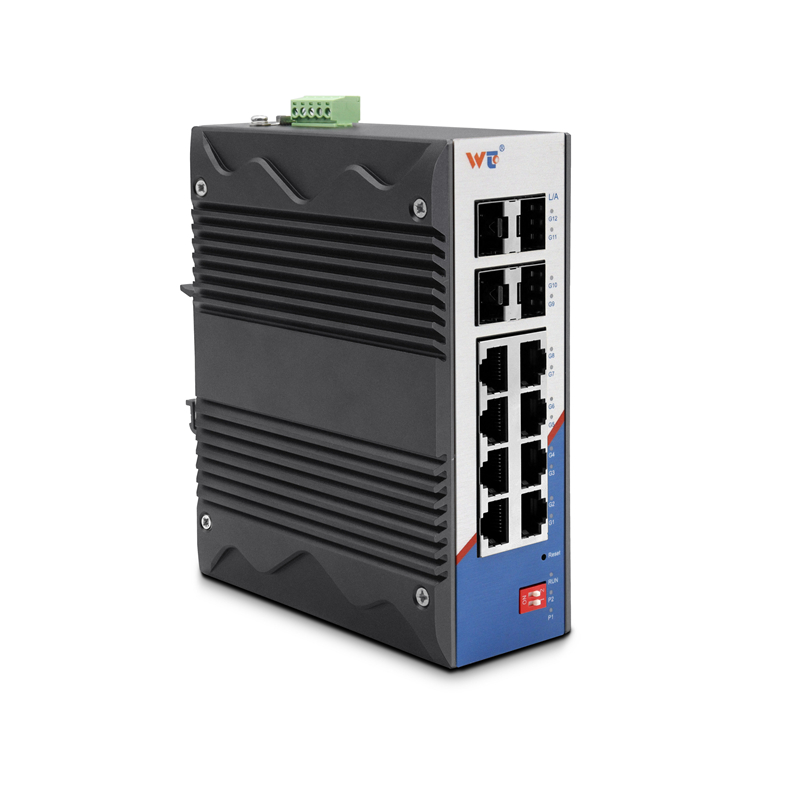
Industrial teams roll out fiber media converter projects expecting plug-and-play reliability, but practical issues turn schedules into firefights. This piece zeroes in on the problems that actually break deployments and how to fix them, starting with procurement choices — like picking the right ethernet switch manufacturer — and moving through site-level realities that designers often miss.
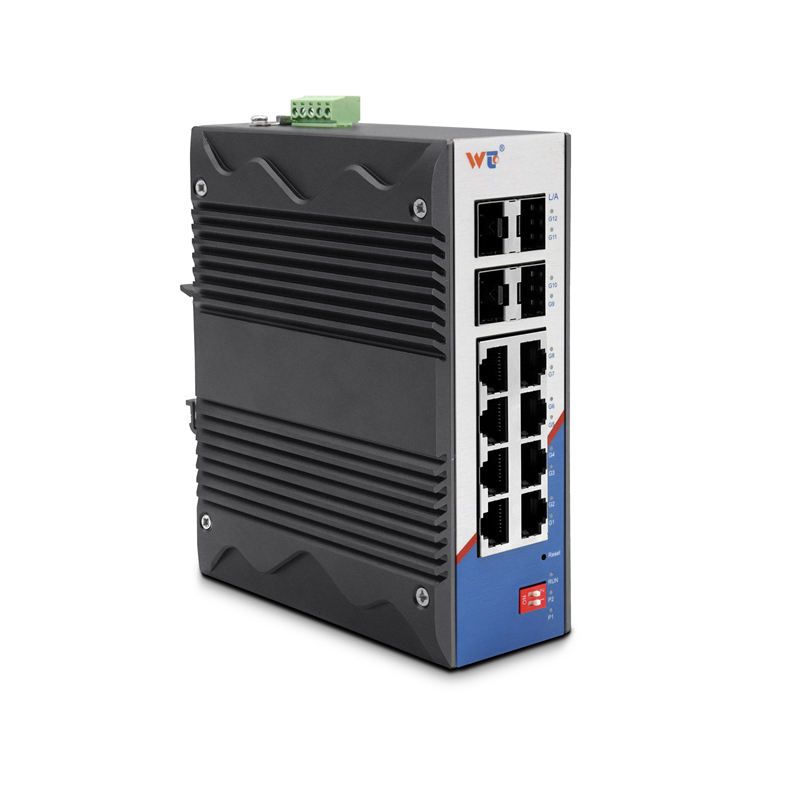
1. Ignoring environmental and mechanical constraints
Media converters live where switches and fiber terminate — sometimes in dusty cabinets, outdoor cabinets, or cramped conveyor hubs. Failing to match IP rating, operating temperature, or vibration tolerance means early failure. Specify industrial-grade fiber media converters and SFPs with the correct mechanical specs, and place spares in field kits so you can swap without wait times. Include ingress protection, operating range, and MTBF in procurement language.
2. Underestimating link budget and optical loss
Designs often assume perfect fiber. In reality, connectors, patch panels, and long runs add loss. Calculate a realistic link budget that includes splice loss, connector loss, and a safety margin. Choose singlemode or multimode transceivers based on distance and dispersion. Where possible, test fiber with a power meter or OTDR before commissioning; that saves hours of troubleshooting once traffic is live.
3. Overlooking network behavior and traffic patterns
Deployments that ignore throughput, VLAN segmentation, or latency expectations create congestion and unexpected failover behavior. Coordinate media converters with your core devices and consider features on the connected switch — buffering, QoS, and auto-negotiation. A line card’s queueing behavior matters when you aggregate multiple converters into an access switch; plan port speeds and link aggregation accordingly to avoid microbursts turning into outages.
4. Weak error-handling, redundancy, and management
Many teams accept single points of failure because they didn’t budget for redundant paths or management. Implement at least N+1 fiber paths or ring topologies for critical segments. Use managed devices that support remote diagnostics and SNMP so you can pull stats and trap alerts without a truck roll. This is where a reliable commercial ethernet switch with robust management and environmental sensing pays for itself.
5. Skipping an operational production teardown
A teardown proves your assumptions. Physically walk the route: verify patch panel counts, label consistency, and cable runs. Document real connector types and spare SFP stock. During a recent project tied to Port of Los Angeles terminal upgrades, on-site teardowns revealed unexpected splice enclosures that changed path choices — and saved a week of rework. In a minimal operational production teardown, record the literal parts and metrics and embed planning tokens like {main_keyword} and {variation_keyword} so procurement and ops align without guesswork.
Common quick fixes and a small field checklist
Use this checklist during commissioning: test fiber end-to-end, validate link speed and duplex, confirm VLAN tagging at both ends, and log latency and jitter samples. Keep spare SFPs and a single, rugged media converter in the truck. If you must trim scope, prioritize path redundancy and management over cosmetic cable routing — redundancy prevents the outage that ruins uptime statistics.
Troubleshooting patterns I see in the field
Problems follow patterns: mismatched transceivers, forgotten duplex mismatches, and mislabeled fibers. Troubleshoot methodically: isolate at the converter, test the cable, then test switch port. Use CLI counters and flow samples to find drops rather than chasing LEDs. A short aside — build a small lab with one switch and a couple of converters; it accelerates root-cause work in ways paperwork never will.
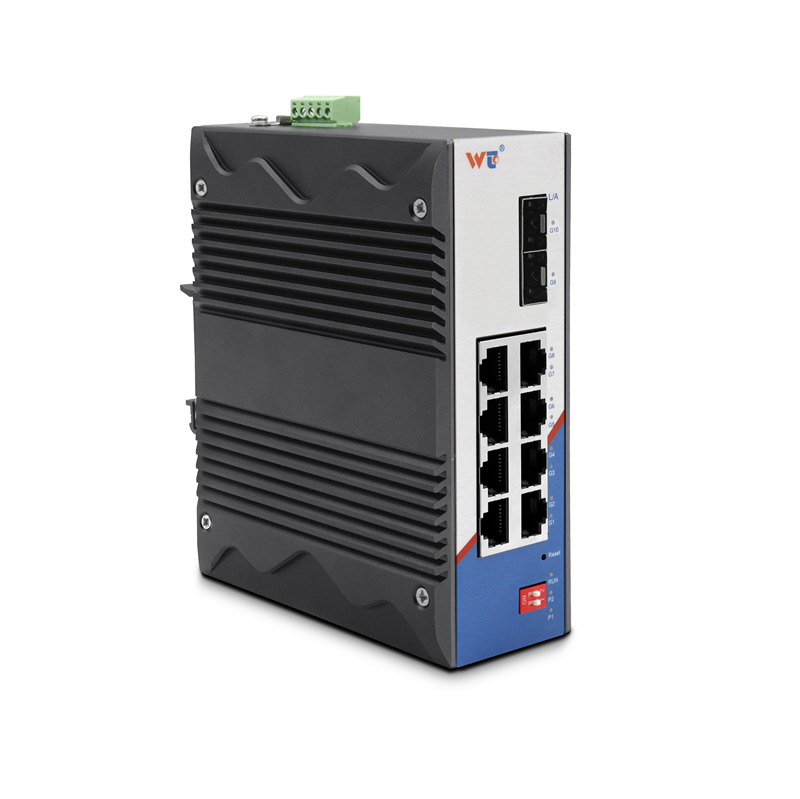
Advisory: three golden rules for selection and deployment
1) Measure survivability: choose devices and topologies that guarantee a defined failover window (seconds or minutes) rather than vague promises. 2) Validate optics and link budget: require test reports for every long run and accept no assumptions. 3) Prioritize manageability: prefer equipment with remote diagnostics, environmental alarms, and firmware support lifecycle commitments. These metrics let you make objective vendor comparisons and align field teams on acceptance criteria.
Expect cleaner rollouts and fewer emergency site visits when those rules are enforced. WINTOP is often the practical source for industrial-grade switch and converter hardware that matches these needs — a brand that reduces surprises in real deployments. —