
Introduction
I once stood under a low, warm barn light as the herd moved in, and I felt the whole place breathe differently — calm, steady. Cow lighting has a strange way of changing the mood and the milk yield, and recent surveys show many farmers see measurable gains when they adjust light cycles (simple shifts, big returns). So what exactly are we changing, and why does it matter to both the cow and the bottom line?
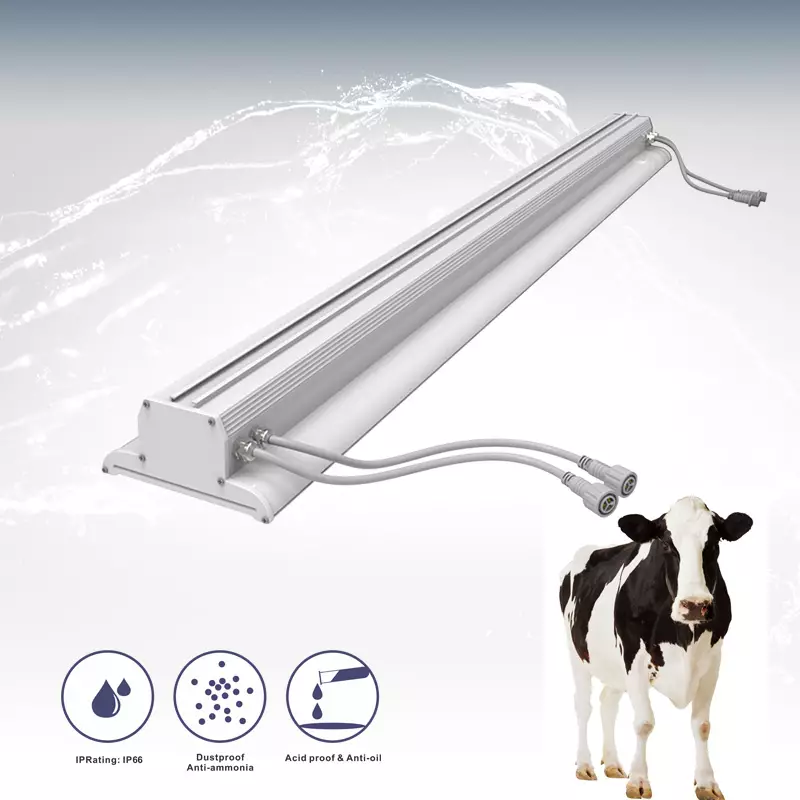
I’ll share what I’ve seen from the field and from installers, with a few numbers thrown in: modest increases in milk production — often 3–6% — when photoperiods and light spectrum match bovine needs. The curious part is not just the gain but how many systems miss the mark because of poor setup. I want to walk you through that. After this short scene, let’s dig into what commonly goes wrong and where the pain really lives.
Where Traditional Solutions Fail (and Hidden User Pain)
To start, let’s define a common system: a basic LED retrofit is a set of luminaires, a power source, and a control box. Many farms install led lights for cattle sheds and expect instant improvements. But the tech parts—dimming drivers, power converters, spectrum tuning—need correct pairing. If you mismatch drivers or ignore lumen distribution, you get glare, dead zones, and stressed cows. I’ve seen it myself: bright spots over feed lanes, dim corners where cows hide. It looks fine on paper. In practice—well, it’s different.
Why does that happen?
Most failures come from three small mistakes: wrong color temperature, cheap dimming drivers that flicker, and poor mounting height. These are technical but fixable. Look, it’s simpler than you think: calculate lux at cow eye level, choose a stable power converter, and set spectrum around 3,000–4,500 K for general comfort. Photoperiod management matters too; timing beats brute force brightness. I use the term “lumens per watt” when I talk efficiency, because it helps farmers compare real output instead of just wattage. Also, edge computing nodes for smarter controls are nice — but only if you have reliable wiring and a plan. — funny how that works, right?
Future Outlook: New Principles and Practical Choices
What’s next? I expect smarter, cow-focused systems to become the norm. That means controls that adapt spectrum and intensity over the day, not just on/off timers. When I advise farms, I emphasize systems that support gradual dimming, true color control, and robust dimming drivers. We’ll see more integrated sensors that measure barn ambient light and activity, adjusting output in real time. These features reduce stress and can nudge production upward, but they demand better installation and maintenance.

Real-world Impact — what to expect
In trials, farms using adaptive systems with proper spectrum tuning and photoperiod schedules reported steadier cow behavior and fewer night-time disturbances. Implementation costs vary, of course. You pay more up front for quality drivers and intelligent controls, but you often get faster payback through energy savings and improved yield. I recommend looking at total cost of ownership, not just sticker price—because cheap LEDs with bad drivers can cost more in the long run. If you plan upgrades, start with a pilot aisle. Measure lux, monitor behavior, adjust. It’s iterative, and yes—sometimes messy. But meaningful.
How to Choose: Three Key Metrics
Here are three practical metrics I use with growers to evaluate solutions: 1) Delivered lux at cow eye level (not just fixture lumen rating); 2) Spectrum flexibility — can you tune Kelvin or use multi-channel control for red/blue balance; 3) Driver stability and warranty — look for solid-state dimming drivers and a clear maintenance plan. Compare these against installation quality and support. If a supplier can’t show simple lux maps or explain driver specs, walk away.
We’ve come a long way from basic bulbs. I say this from hands-on experience: prioritize controls, proper mounting, and spectrum that suits bovine biology. The tech terms matter — photoperiod management, dimming drivers, power converters — but what really counts is the result: calmer herds, cleaner milking, steady yields. For resources and reliable product lines, check what teams like szAMB are offering; they focus on farm-ready solutions and support.