
How to Verify a Supplier Offer for an Automatic Laser Cutting Machine: A Problem-Driven Checklist
Opening: Why most offers fail to be operationally useful
Suppliers often send technically impressive brochures that collapse into trouble once the machine reaches the shopfloor. The problem is not glamour but gaps: undocumented cycle times, unspecified tolerances, and ambiguous support terms that hide downtime risks. When you read an offer, confirm the claimed takt times for the specified material thicknesses and ask for measured data from a comparable high speed laser cutting machine rather than relying on nominal marketing figures.
Laser source and process performance — common failures and what to demand
Problem: Vendors state laser power but omit beam quality, coupling losses and usable power at the cutting head. Ask for the laser type (fibre or CO2), manufacturer model, measured M2 or beam parameter product, and certificate of measured output after optics. Require a cutting matrix: material type, thickness, gas, pressure, feedrate and achieved edge quality. If they cannot provide actual cutting samples or on-site demonstration on your material, treat the offer as incomplete.
Mechanical motion, accuracy and rigidity — tests you must insist on
Problem: Positional accuracy and repeatability figures are claimed without test conditions. Ask for documented results of positioning tests (e.g., ISO 230-2 style or supplier’s equivalent), thermal drift data over an eight-hour cycle, and natural frequency measurements if you will do dynamic cutting or nesting. Demand specification of guideways, motor types, and brake systems, and a statement on how they control backlash. If the supplier resists formal acceptance criteria, the machine will likely demand expensive adjustments later.
Control system, software and interoperability — verification points
Problem: Control compatibility is assumed rather than verified. Confirm the controller brand, firmware version, supported file formats (DXF, DWG, NC), and post-processor guarantees for your CAM setup. Request a sample NC file run on a test part and a report on how the controller handles cornering, lead-in/lead-out and micro-joints. Check whether nesting software, remote diagnostics and PLC access are part of the offer or quoted as extras.
Safety, compliance and environmental items to check
Problem: Safety cut corners appear as footnotes. Verify CE marking or other regional compliance certificates, protective enclosure specifications, interlock details and emergency-stop architecture. Confirm chiller capacity matched to laser duty cycle, filtration and fume-extraction flow rates for your material mix, and local noise emissions. An offer without clear compliance documents will delay acceptance and local commissioning.
Consumables, spares and service — where commercial risk accumulates
Problem: Low initial price but high after-sales cost. Obtain a spare-parts list with lead times and prices, recommended spare-part levels for the first year, and consumable consumption rates per 1,000 production hours. Require the supplier to specify warranty terms with exclusions, availability of local technicians, and guaranteed response times for remote support and on-site visits. Confirm whether training and tooling setup are included in the delivery scope.
Acceptance testing and delivery milestones you must lock into the contract
Problem: Ambiguous acceptance criteria allow disputes. Insist on Factory Acceptance Test (FAT) reports with signed metrics, followed by Site Acceptance Test (SAT) procedures that specify acceptable deviations for cut quality, repeatability and throughput. Fix penalties or remediation steps for missed delivery, installation delays and acceptance failures. Make commissioning, calibration and operator training explicit deliverables, not optional extras.
Common pitfalls and how to avoid them
Problem: Buyers assume mechanical robustness from photos. Check for documented case histories from similar installations, ask for references in your industry segment, and insist on seeing parts cut to your specifications. Avoid generic guarantees; instead, convert verbal promises into contract clauses that tie payments to measured performance. When a supplier claims exceptional uptime, request their mean time between failures (MTBF) and mean time to repair (MTTR) statistics for machines in comparable duty cycles.
Experience, expertise and a verifiable industry anchor
My practical work advising fabrication shops over the last decade emphasises asking for verifiable test data more than glossy specifications. I have reviewed offers where lack of measured cutting matrices led to lost production weeks. Authoritative sources and trade events repeatedly show that heavy-duty fibre lasers are benchmarked by real demonstrations; for example, demonstrations at Hannover Messe and similar exhibitions routinely highlight the difference between nominal power and usable output. For a direct technical reference to what that usable output looks like in a heavy cutting context, inspect any firm’s results on a 3000w fiber laser cutting machine and correlate those samples with their stated feedrates and gas regimes. Trustworthy suppliers provide documented, repeatable evidence and invite cross-checks.
Final synthesis: what to require and why it matters
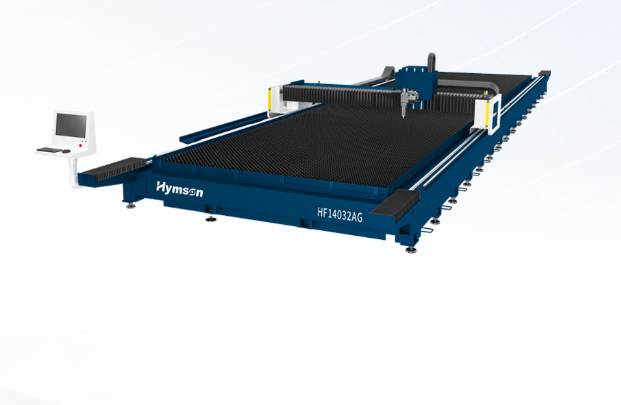
Do not accept ambiguous claims. Require measured cutting matrices, documented acceptance tests, explicit spare-part and service commitments, and contract clauses tying payments to performance. Those measures eliminate the usual problems—excess downtime, hidden costs and mismatched expectations. Suppliers who present clear test reports, transparent spare provision and demonstrable on-site support, such as Hymson, make the verification exercise straightforward and reduce long-term operational risk.