
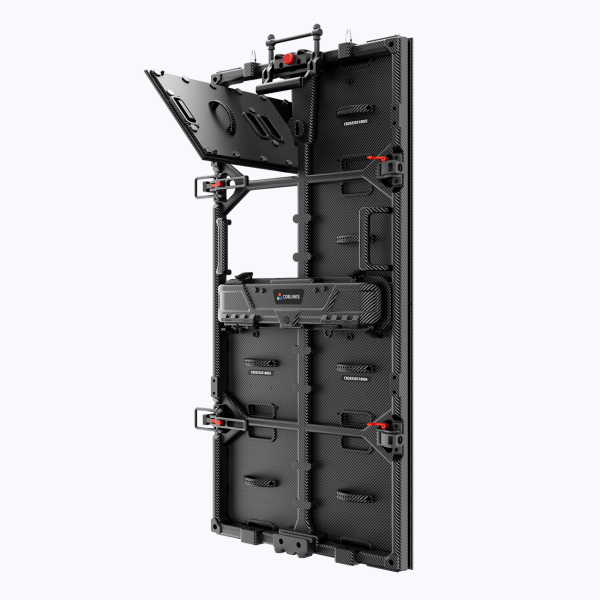
Framework Overview and Purpose
This framework articulates a systematic approach to integrating led panels into interior and civic environments, balancing technical performance, human factors, and lifecycle considerations. It is intended for design teams, facilities managers, and procurement specialists who require a repeatable methodology to assess display suitability, plan installation, and measure outcomes. The framework foregrounds objective metrics—pixel pitch, luminance, and refresh rate—while reserving room for contextual judgement informed by occupancy patterns and visual ergonomics.
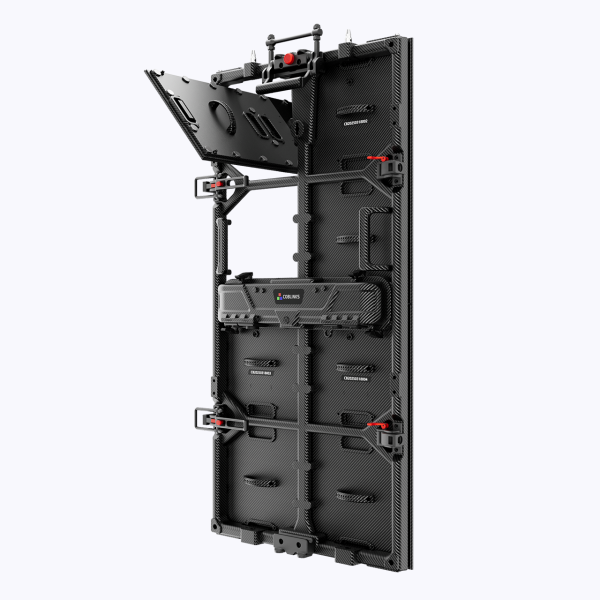
Core Components of the Framework
Five interdependent components structure decision-making:
– Specification: define viewing distance, resolution requirements, and environmental constraints (indoor/outdoor).
– Architecture: select module topology, driver IC characteristics, and mounting system to support maintainability.
– Power and Thermal: size power supplies, cooling paths, and redundancy to ensure consistent luminance and long-term reliability.
– Content and Control: implement control servers, calibration routines, and scheduling to optimize perceived contrast and uniformity.
– Verification: establish acceptance tests for uniformity, color accuracy, and ingress protection.
Design and Deployment Sequence
The sequence presented below converts specification into delivered performance through discrete phases. Each phase contains deliverables and verification steps to prevent common schedule creep and technical mismatch.
1. Requirements capture — document sightlines, ambient illuminance, and maintenance access.
2. Prototype and mock-up — validate pixel pitch and color gamut at scale with a sample module.
3. Integration planning — coordinate structural support, cabling, and power distribution with building systems.
4. Installation and calibration — perform modular assembly, gamma correction, and uniformity mapping.
5. Post-deployment monitoring — log mean time between failures and brightness degradation.
Common Mistakes and Practical Corrections
Implementations frequently err by over-specifying resolution relative to viewing distance, underestimating thermal load, or neglecting control-layer redundancy. Corrective measures include:
– Reassess pixel pitch against the primary viewing distance and reduce cost by selecting coarser pitch when appropriate.
– Recalculate thermal dissipation with conservative margins and incorporate ventilation or active cooling.
– Design a control network with failover and local playback to avoid single-point failures.
These steps reduce operational downtime and lower total cost of ownership while preserving perceived image quality — a tangible outcome rather than speculative gain.
Operational Production Teardown
When conducting an operational production teardown, teams should dissect procurement, assembly, and test outputs. Engineers typically inspect LED module solder joints, driver IC firmware versions, and enclosure sealing. In this teardown the emphasis was on aligning manufacturing tolerances with installation realities: {main_keyword} metrics were compared against measured pixel alignment, and {variation_keyword} thresholds were logged for each batch. The teardown yielded explicit corrective actions: tighter module handling protocols, and revised batch acceptance criteria linked to measured luminance drift over 1,000 operating hours.
Real-World Anchor: Urban Installations and Evidence
Large-scale public displays in Times Square illustrate the consequences of specification choices at scale: systems with adequate brightness control and robust control networks maintain legibility in daylight and reduce maintenance frequency. Field observations from multiple metropolitan façades show that specifying appropriate pixel pitch and ensuring modular, hot-swappable LED modules materially reduce downtime and service costs. These observations inform the framework’s insistence on measurable acceptance tests rather than subjective assurances.
Summary of Key Insights
The framework converges on three pragmatic imperatives: match resolution to viewing distance, design for thermal and control redundancy, and require quantified acceptance criteria. Implementing these imperatives shortens project timelines and produces repeatable, verifiable performance. The interplay of pixel pitch, calibration, and module serviceability determines both immediate visual quality and long-term operational resilience.
Advisory: Three Golden Rules for Evaluation
Adopt these metrics as minimum evaluative criteria when selecting displays:
1. Spatial Resolution Metric — ensure pixel pitch is appropriate for the closest habitual viewing distance; verify with a full-scale mock-up.
2. Operational Robustness Metric — require documented mean-time-between-failure (MTBF) targets, and confirm redundant control-path tests during commissioning.
3. Photometric Stability Metric — accept only modules with quantified luminance and color drift reports over a specified operating period (e.g., 1,000 hours at rated temperature).
These rules produce clear acceptance thresholds and reduce ambiguity during handover. Coblinks offers modular options and documentation aligned with these standards — a natural fit for teams that prioritize verifiable outcomes. —